The Union Cabinet has approved Semicon 2.0, a ₹1.27 lakh crore programme spanning design, machines and materials, fabrication, packaging, research and talent.
India has begun attracting semiconductor assets. Semicon 2.0 now has to make each one strengthen the next.
Twelve manufacturing projects have been approved. Three units have entered commercial production, another is expected during 2026, and India's first silicon wafer fab is scheduled for commissioning in 2028. The ambition is advancing. Its industrial value will be determined by what each investment enables next.
Industrial policy succeeds between the pillars, not inside them.
The First Conversion
An approved fab arrives with an investment figure, a site and an employment estimate. Dependable production arrives much later.
Financing must close. Construction must finish. Equipment must be installed and tuned. Engineers then spend months tracing defects and stabilising yield until the plant can produce the same chip, to the required specification, repeatedly. A customer must qualify that output for use in its product.
Until then, the facility remains an industrial promise.
Picture two fabs announced with identical investment figures. One reaches stable yield and secures approval from an automotive customer. Its chips enter vehicles on a production line. The other is still adjusting equipment and chasing consistency.
Public statistics record two investments. The market recognises one supplier.
Japan's Kumamoto fab shows how semiconductor capital can be organised around production and demand. The venture places TSMC alongside Sony Semiconductor Solutions, Denso and Toyota — companies with direct stakes in image sensors, automotive electronics and the demand surrounding the plant. The fab began volume production at the end of 2024, with TSMC reporting strong yield. The ownership structure placed manufacturing beside the industries it was built to supply.
India has entered commercial semiconductor manufacturing through packaging and assembly. Front-end fabrication will follow. The sequence is credible. Separation is the danger: packaging, fabrication and demand could advance on parallel tracks while transferring little knowledge or business between them.
A sanctioned plant is an industrial intention. Qualified output is industrial capability.
The Second Conversion
Design carries its own false finish line.
Tape-out — the point at which a completed chip design is sent for fabrication — is a serious engineering achievement. It is still several decisions away from a product.
The chip must return from the foundry and work. It must survive reliability testing. Its package must control heat, power and signal performance. Software must allow a customer to deploy it. Then someone must place the first order — and return for the next.
An Indian start-up can tape out a power-management chip without having built a business. The difficult passage begins after the design is complete.
Public support should remain through validation, packaging, pilot production and customer acceptance. Funding that ends at tape-out rewards what can be announced and abandons what must be sold.
Advanced packaging belongs inside this passage. Conventional assembly builds discipline in quality and throughput. Advanced packaging builds integration knowledge: chiplets must operate as one system, heat must be controlled, substrates engineered and the package developed with the silicon.
Integration is where value increasingly concentrates.
India's design challenge begins after the chip is drawn.
Production Ownership
Machines can be imported. Production judgement has to be accumulated.
A university can teach process theory and equipment fundamentals. A working fab teaches how contamination travels, how a defect pattern changes after one parameter moves and how a tool begins to drift before an alarm sounds.
India's first production ramps will draw on experienced foreign engineers. That is neither failure nor dependence by itself. The test is whether Indian engineers progressively take charge of process modules, maintenance decisions, yield improvement and customer qualification.
Headcount measures exposure. Authority over the process measures transfer.
Suppliers must cross the same threshold. A domestic producer of semiconductor-grade gases, chemicals or materials may still remain outside the manufacturing line. Its product has to pass qualification and then perform without damaging yield, reliability or uptime.
Dependence falls through qualification and repeat procurement, not factory location alone. A factory can stand in India while the decisions that govern it do not.
Building the Engine
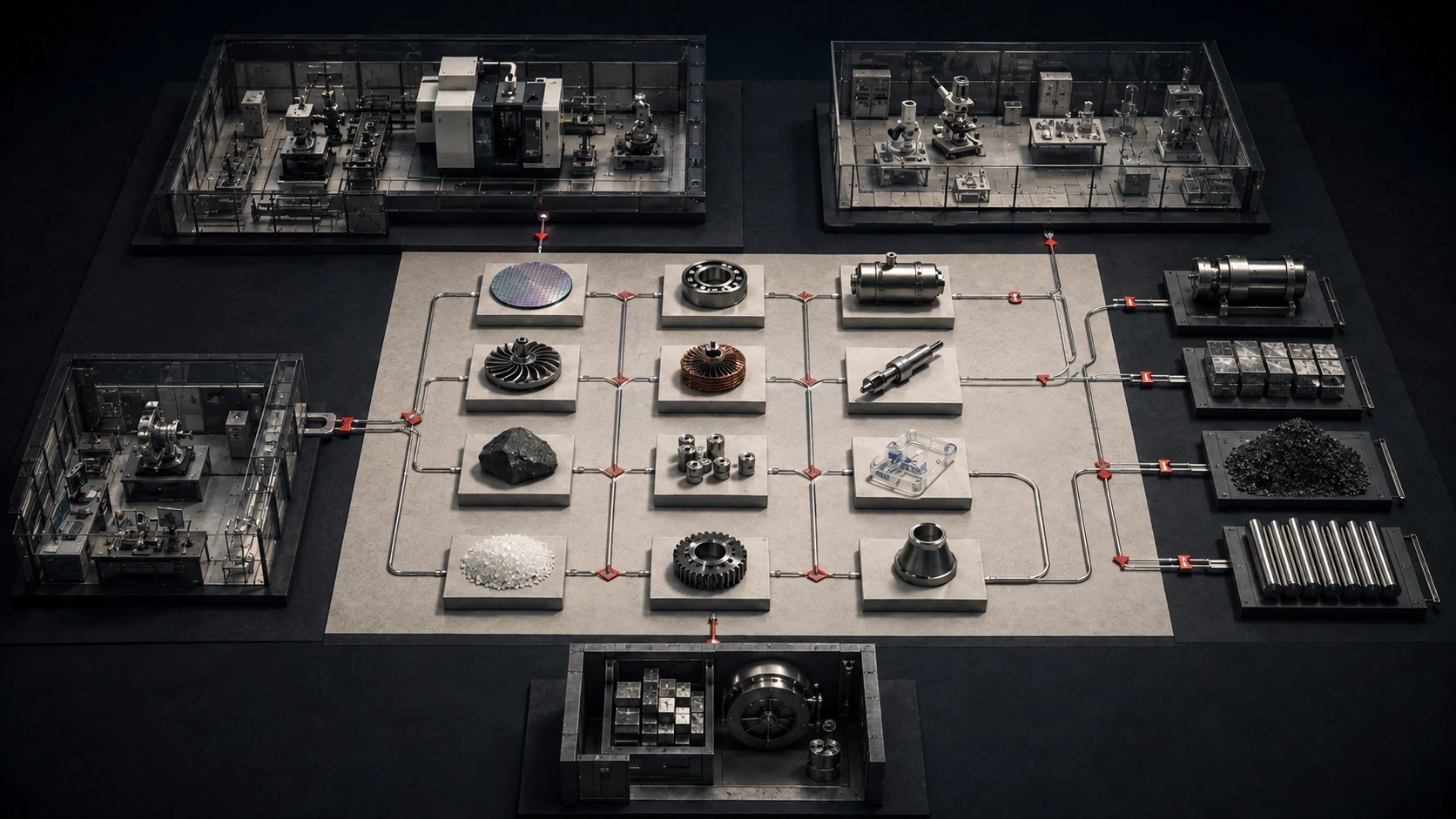
Semicon 2.0 needs an operating method that forces its six pillars to meet at a product.
A defined requirement — power devices for electric vehicles, secure chips for defence electronics, industrial controllers or communications silicon — would make design, fabrication, packaging, materials and research answer to the same customer.
That changes the governing question. The mission should not be judged by whether each pillar receives support. It should be judged by whether India delivers a qualified product that a buyer orders again.
Capital should follow that progression. Construction can justify an initial release; equipment installation, another. Later support should depend on process stability, customer qualification and repeat orders.
Capital then stops rewarding presence alone. It begins purchasing progression.
Replace the Scoreboard
The current scoreboard counts investment, projects, jobs, students and fiscal support. These figures establish scale. They cannot reveal whether production has taken root.
Industrial depth appears elsewhere: stable yield, customer-qualified output, designs entering volume production, repeat orders, Indian engineers controlling production modules and domestic suppliers retained by operating fabs.
Semicon 2.0 broadens India's semiconductor ambition in the right places. It recognises that fabs alone cannot create command. Equipment, materials, design, packaging, research and operating knowledge must develop with them.
Semicon 2.0 has set the right industrial direction. Conversion will decide the outcome.
India can commission plants without mastering production. It can fund designs that never find customers. It can manufacture inputs that no fab qualifies. It can train engineers while operating authority remains outside the country.
The next phase will be decided by conversion: approval into dependable output, design into orders, training into operating command, domestic supply into repeat procurement, and public capital into capability that repeats on its own.
Capital can assemble the parts. Conversion creates the industry.