
The Molecule Is Not The Asset
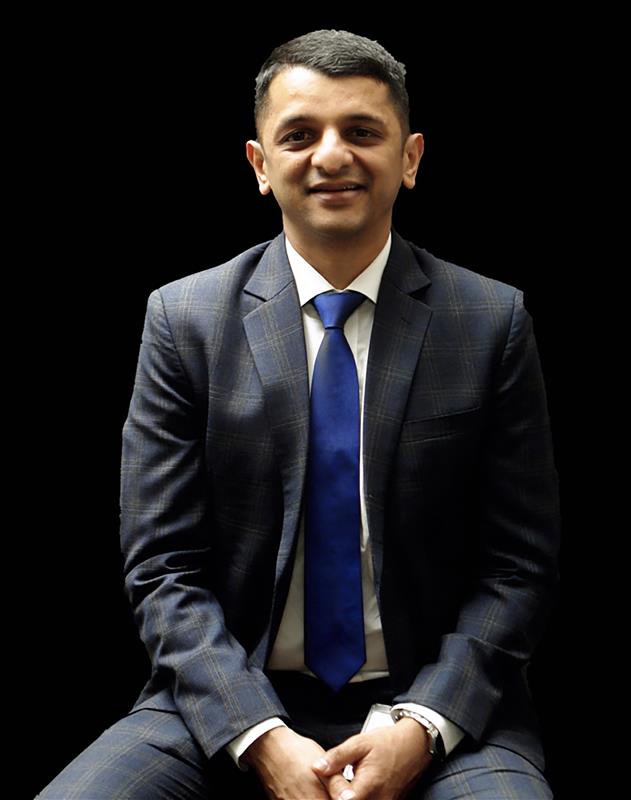
Aether Industries does not discover molecules. Aman Desai draws the line at the start: the company innovates the process that makes them viable at scale.
In specialty chemicals, a product may leave the plant as a liquid, a solid, an intermediate, an advanced material or an electronic chemical. But the molecule itself is not always the economic asset. Discovery may create the molecule. Manufacturing may create the output. The process route decides how much value stays with the maker.
A job-work factory executes an assigned route. A process-owner redesigns the route, protects the method, validates the outcome and scales it commercially. A country can manufacture the molecule and still rent the intelligence that makes it viable.
The molecule is visible. The route decides value.
PROCESS IS THE MOAT
The Route Begins On Paper
A molecule on paper is a structure waiting to be pulled apart, bond by bond, and rebuilt through alternate paths. One route is conventional. Another is cleaner. A third cuts steps, improves yield or avoids a risky input. Another may work perfectly in a laboratory but fail when exposed to plant reality. The process asset begins with that choice, before a reactor is ever switched on.
Desai's point is physical. An organic chemist can take a molecule, break it apart and put it back together in a hundred different ways. For advanced materials and semiconductor-grade chemicals, Aether does not merely optimise a regular path. It often redesigns the process from scratch.
Optimisation improves an inherited path. Route redesign creates a proprietary path. The first act of ownership is choosing a different route.
ROUTE DESIGN CAPTURES VALUE
The Pilot Plant Converts Chemistry Into Power
Sites 1 and 5 sit between the paper route and the commercial plant. They take the proprietary route designed on paper and subject it to physical reality. With 120 PhD and master scientists working alongside more than 100 chemical engineers under one roof, the facility forces theory to behave like production.
Desai is not arguing for lab size. His point is that the chemist, the chemical engineer, the pilot reactor, the analytical equipment and the plant logic sit close enough for a route to be tested before it becomes a commercial risk.
This bridge between route and plant exposes failure early. It compresses learning, builds precedents, validates routes and builds customer trust. It turns soft know-how into manufacturable capability.
This is where a paper route starts behaving like plant chemistry.
Enforceability Decides Protection
Process IP is not protected by reflexively filing a patent. The decision between a patent and a trade secret is a defensive calculation, driven by enforceability, particularly in markets like China and India.
The weakest protection method is the one the market can copy faster than the owner can enforce.
A patent publishes the claim. A trade secret protects the path. The decision depends on exposure, defensibility, customer requirement, enforcement reality and commercial advantage.
Protection is not paperwork. It is a defence decision shaped by enforceability.
Trust Is An Operating System
For global innovators, IP protection sits beside safety as a non-negotiable. In its CRAMS work, Aether builds systems where customer IP and Aether's process intelligence coexist without leakage.
This requires access-controlled IT networks, access-controlled printers and strictly separated research silos. A team working on an agrochemical project for one multinational will not touch agrochemicals for another. It moves to materials, oil and gas, or another domain. The separation prevents inadvertent cross-contamination of IP.
Trust is engineered before it is promised.
CHEMISTRY NEEDS ENGINEERING
Chemistry Needs Engineering
The difference begins before manufacturing. At Aether, chemical engineers enter the problem while the process is still in R&D. A global IP mindset — one Desai observed at Dow Chemical and brought to Surat — demands the marriage of chemists and chemical engineers at the R&D stage itself.
A chemist may design the route. A chemical engineer makes the route survive heat, pressure, flow, impurity, yield, equipment, cost and plant reality.
This prevents beautiful chemistry from becoming unbuildable chemistry. A process is not owned until it can survive scale.
Purity Is The Trust Gate
In the semiconductor-grade chemical space, purity is not an afterthought. It is the admission ticket to the customer's process.
India has built analytical infrastructure and expertise, with Aether executing measurements down to the parts-per-billion level for trace elements. However, the ecosystem still lags behind Japan, Taiwan, Korea, the US and Europe.
India can measure at serious depth, but the final trust layer in advanced electronic chemicals still often sits with the customer abroad. In advanced materials, process ownership is incomplete without validation depth.
VALIDATION DECIDES ACCESS
Paper To Revenue
Aether shortens the deep-tech clock because it does not start at molecule discovery. Global innovators spend years proving a molecule's utility. Aether enters when the molecule has to become manufacturable.
The premise of the R&D pipeline is not curiosity alone. Each process is tested against the possibility of commercialisation.
Speed matters because every failed route consumes equipment, capital and scientific attention. Success and failure are both acceptable outcomes, but both must be reached fast and proven with data. A process that cannot work should be shelved early.
Process ownership becomes profitable when technical judgement moves quickly enough to convert paper chemistry into revenue.
The Input Chain Still Matters
Process intelligence can still be constrained if the input base is externally controlled. India remains heavily dependent on imported base chemicals, intermediates and commodities, not just for electronics but across the pharmaceutical and agrochemical sectors.
Chemical self-reliance has to begin deeper in the stack: with the plants that produce those inputs.
A proprietary process is weaker when its raw-material base is exposed.
The Ownership Shift
Aether rejects the capital-light licensing model. Desai has no interest in selling code or an "IP piece of paper." Chemists and chemical engineers, he notes, ultimately want to hold a liquid or solid, package it and send it to the customer.
Aether does not separate IP from manufacturing. It turns process IP into manufacturing power.
The intangible asset proves itself physically: in the lab reactor, the pilot plant, the commercial plant, the purity certificate, customer qualification and the packaged product.
India's chemical upgrade will not come from producing more molecules alone. It will come from controlling the route, protecting the know-how, validating the process, deepening the input chain and converting process intelligence into commercial manufacturing power.
OWN PROCESS OWN MARGIN
Strategy Note
Build The Process Ownership Layer
To capture value in specialty and advanced chemicals, India must treat process engineering as an ownership layer, not a support function.
Capital must move into the route-to-plant layer: pilot plants, process R&D, ultra-pure analytical infrastructure, base-chemical depth and lab-to-plant chemist-engineer teams.
Defence must follow enforceability: trade-secret systems where filing exposes too much, process patents where claims can be defended, protected customer silos, retained know-how and validation capability.
Speed must be measured: the median days from a paper route to a data-backed go/no-go decision.
Success and failure are both acceptable. Slow failure destroys capital. India's chemical IP advantage will be measured by how fast paper routes become validated processes, and how much of that process intelligence remains inside the economy.
More from Issue 5 · Own the IP