
The Road to 50 in the Global 500 Runs Through a Scale Pipeline
India’s bid to move from 10 to 50 companies in the Global 500 needs a route to clear government-side blockages without shifting commercial risk to the state.
8 September 2026

UPFRONT
Existing district programmes now need a common productivity account.
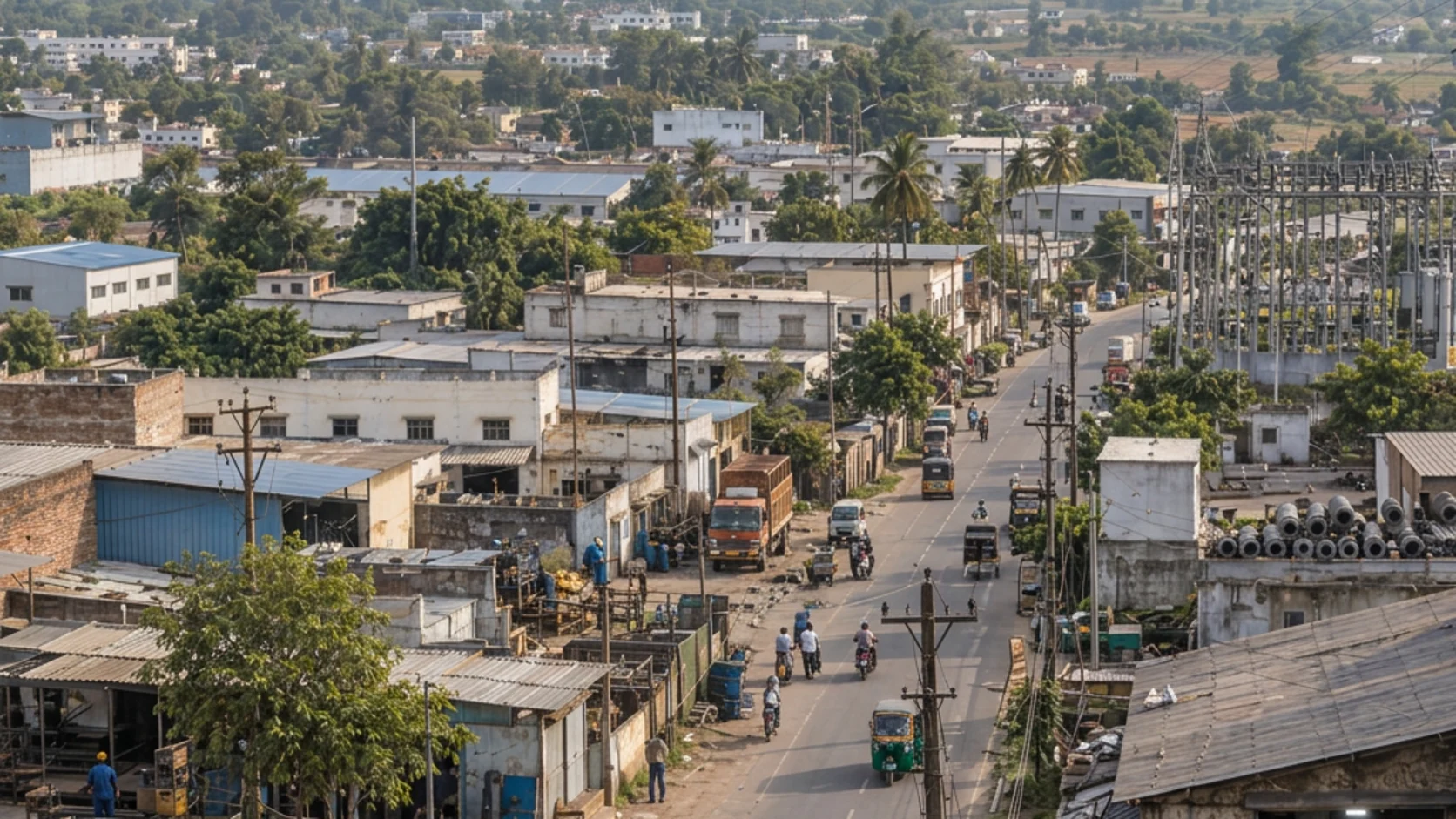
For the first time, a district-level release from the Ministry of Statistics and Programme Implementation (MoSPI) shows how the scale and output per worker of unincorporated non-agricultural enterprises vary across 757 districts.
In May, MoSPI placed the sector at 7.92 crore establishments and 12.81 crore workers. The September release brings that national picture down to district level, covering 757 of 770 districts.
The concentration is sharp. Fifty districts account for nearly one-third of the sector’s establishments, workers and gross value added. In 280 districts, GVA per worker exceeds the sector’s all-India average of ₹1,56,539. Women make up a third of the workforce in 237 districts, and over half in 25.
Two districts can host similar numbers of enterprises and still offer very different prospects for incomes, productivity and scale. In one, unreliable power may constrain output. In another, machinery, working capital, certification or access to larger buyers may be the real limit. The release makes those differences visible enough to investigate rather than assume.
The district machinery already exists. District Industries Centres, One District One Product (ODOP), export committees and RAMP-funded state plans work locally. Export plans have been drafted for 590 districts and notified in 249. These institutions identify products and deliver schemes, but India Front’s review of their published frameworks found no common district measure of output per worker.
The release has supplied the evidence. Responsibility for acting on it remains dispersed. MoSPI supplies the baseline, while ODOP, export hubs and RAMP sit across the Department for Promotion of Industry and Internal Trade (DPIIT), the Department of Commerce through the Directorate General of Foreign Trade (DGFT), and MoMSME. States execute through their own departments and district bodies. No one is clearly accountable for converting a district productivity finding into a programme choice.
A District Enterprise Productivity Account would give that responsibility a working form. MoSPI and the relevant central ministries would set a common framework. State industry departments would publish the district accounts and use them to judge what local intervention is actually warranted.
Raw GVA cannot carry that burden alone. Districts need to be compared against similar activity profiles, with minimum reliability thresholds and repeated movement over time. Otherwise a shift in sector mix, statistical noise or falling employment can masquerade as productivity. GVA and earnings per worker should remain the outcomes. Credit access, Udyam registrations and similar measures should help explain movement rather than substitute for it.
Where Strategic Investment Plan headroom permits, RAMP could fund pilot designs before March 2027. After that, MoSPI would need to refresh the statistical base while states keep the accounts alive through regular industry planning.
The account would also force a more useful distinction between districts. Some productive concentrations may be ready for standards, certification and larger buyers. Others may first need reliable power, better production systems, finance or stronger local markets. In thin-enterprise districts, cluster policy may have to wait until viable firms and buyer relationships exist. Funding would follow the district evidence, not the category itself.
A sector this size will not become more productive through a uniform national prescription. Its constraints sit in workshops, markets and district power systems that differ from place to place. Better diagnosis allows policy to meet the actual constraint. Higher productivity and earnings can then deepen supplier capability and give more firms the capacity to scale.
Doctrine
More from Upfront
India’s bid to move from 10 to 50 companies in the Global 500 needs a route to clear government-side blockages without shifting commercial risk to the state.
8 September 2026

India should map its future machinery demand early enough for domestic suppliers to develop, qualify and compete before procurement begins.
3 September 2026

India’s shortlist of approximately 100 critical imports requires industrial decisions at product level.
26 August 2026