
India Must Gain Global Client Leadership
India already supplies professional capability globally. Indian firms must now originate mandates, retain clients across markets and earn recurring foreign revenue.
22 September 2026

UPFRONT
India already has substantial trade, finance and project machinery. The missing layer is a company-level route that takes specific government-side decisions or institutional blockages to the responsible authority, while strategy, capital and commercial risk remain with the firm.

The Prime Minister has given India a number: fifty Indian companies among the world's five hundred largest within a decade. The relevant ranking is the Fortune Global 500. India has ten companies on this year's list. Reaching fifty means a net addition of forty while holding the ten already there, and the revenue threshold changes from year to year. The agenda is already moving beyond that speech. On 6 September, the Commerce Minister pushed pharma beyond generics and towards deeper global integration.
Fortune ranks companies by consolidated revenue. India's domestic market is large enough to build very large companies, and that is a real asset. But the Prime Minister's wider agenda—an Indian bank among the world's top five, one or two Indian pharmaceutical companies among the world's top five, global standing in technology and professional services—points past a ranking exercise. The objective is durable corporate scale, not entry into a list at any cost.
The Global 500 is concentrated in a handful of countries. The 2026 list has 141 US companies, 122 from Greater China, 40 from Japan and 13 from South Korea. South Korea is useful for another reason: its count has fallen from eighteen in 2023 to thirteen now. For India's target, the relevant point is retention. A national scoreboard has to track exits as closely as entries and keep a serious bench of companies approaching the threshold.
India already has substantial machinery. Exim Bank finances overseas acquisitions, working capital and the purchase of brands and intellectual property. Export policy, trade agreements and market-access negotiations are in place. The Project Monitoring Group tracks approvals and other issues across responsible authorities for qualifying large projects. The missing layer is not another agency or portal. PMG can continue to handle project issues, Exim Bank can continue to judge financing, regulators retain statutory authority, and the relevant ministries handle trade or recognition barriers. The company becomes the unit of diagnosis. Existing institutions remain the units of execution. The Pipeline does not replace them or rerun their appraisals. It follows the company across them when a government-side blockage cuts across mandates.
A Global Scale Pipeline should begin only when a specific government-side decision or institutional blockage cannot be resolved by the company itself. A company pursuing genuine international scale could bring an approval delayed between Indian agencies, a certification-recognition barrier requiring government engagement, or a public financing process stalled between institutions. The Pipeline verifies that public action is genuinely required, identifies the authority with jurisdiction, records the decision required and the timetable for reaching it, and tracks the case until a decision is made. The regulator, ministry or lender still decides, and the answer can be no. The company should disclose only what is needed to establish the constraint. Its wider strategy remains confidential.
Published eligibility criteria should test audited scale, a credible international expansion case and meaningful company capital at risk. Any firm meeting them should be eligible to enter. Weak products, poor management, bad acquisition economics and lost customers remain company-side problems, and no lender's credit judgement should bend around them. The company still chooses its markets, technology, acquisitions and capital structure, and carries the commercial risk. Public authorities own the decisions within their control. The company still has to win the market. Where one company's case reveals a general policy defect, the correction should apply to every company facing it.
The national scoreboard should track entry, retention and the bench just below the cut-off. When the same government-side blockage keeps appearing, it becomes a ministerial policy problem. The Prime Minister's decade points to roughly 2036. Companies that reach and hold that scale by then enter the final decade to 2047 with deeper technology ownership, capital and international operating experience.
Doctrine
Go Deeper
India already supplies professional capability globally. Indian firms must now originate mandates, retain clients across markets and earn recurring foreign revenue.
22 September 2026
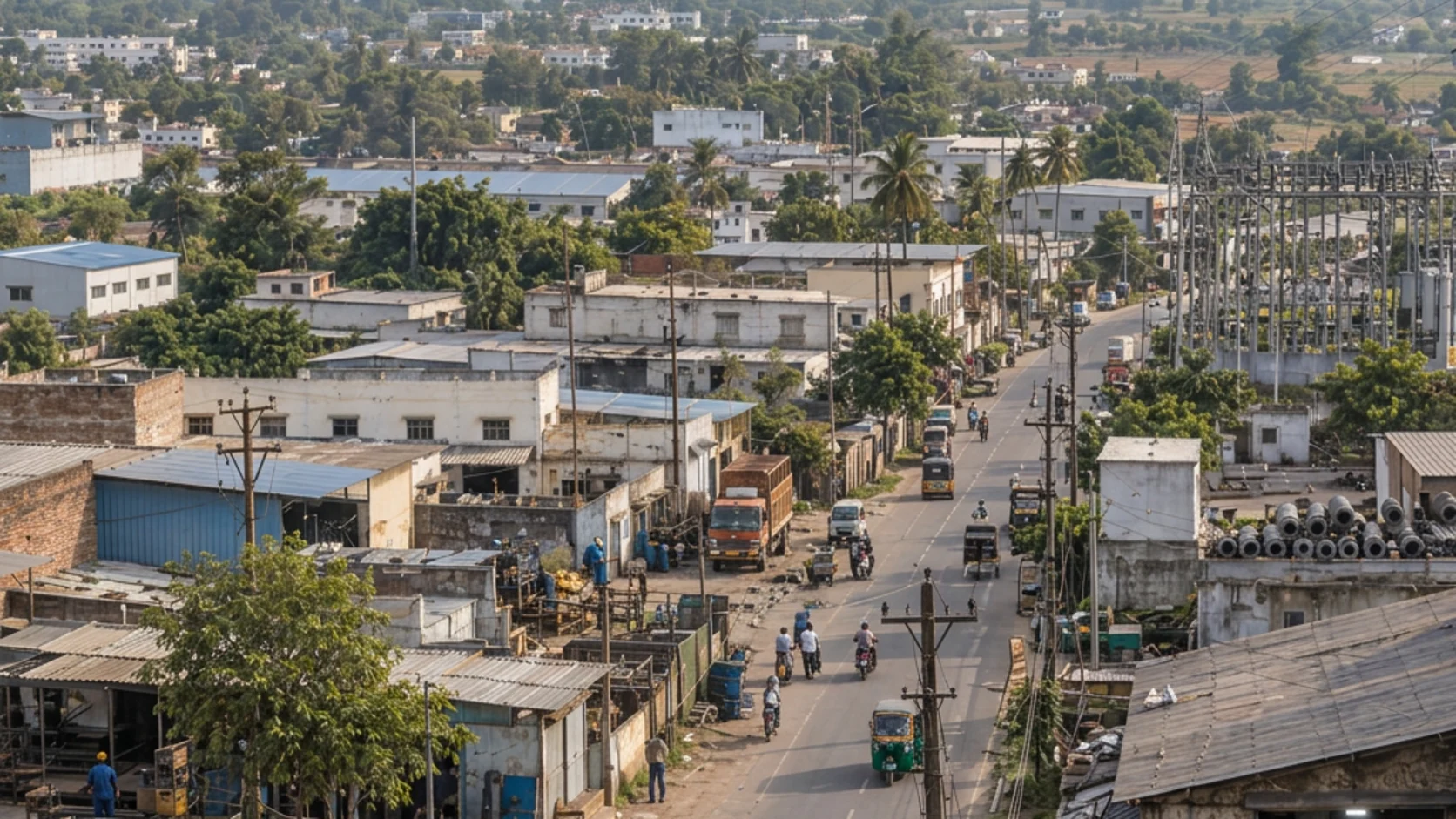
Existing district programmes now need a common productivity account.
12 September 2026
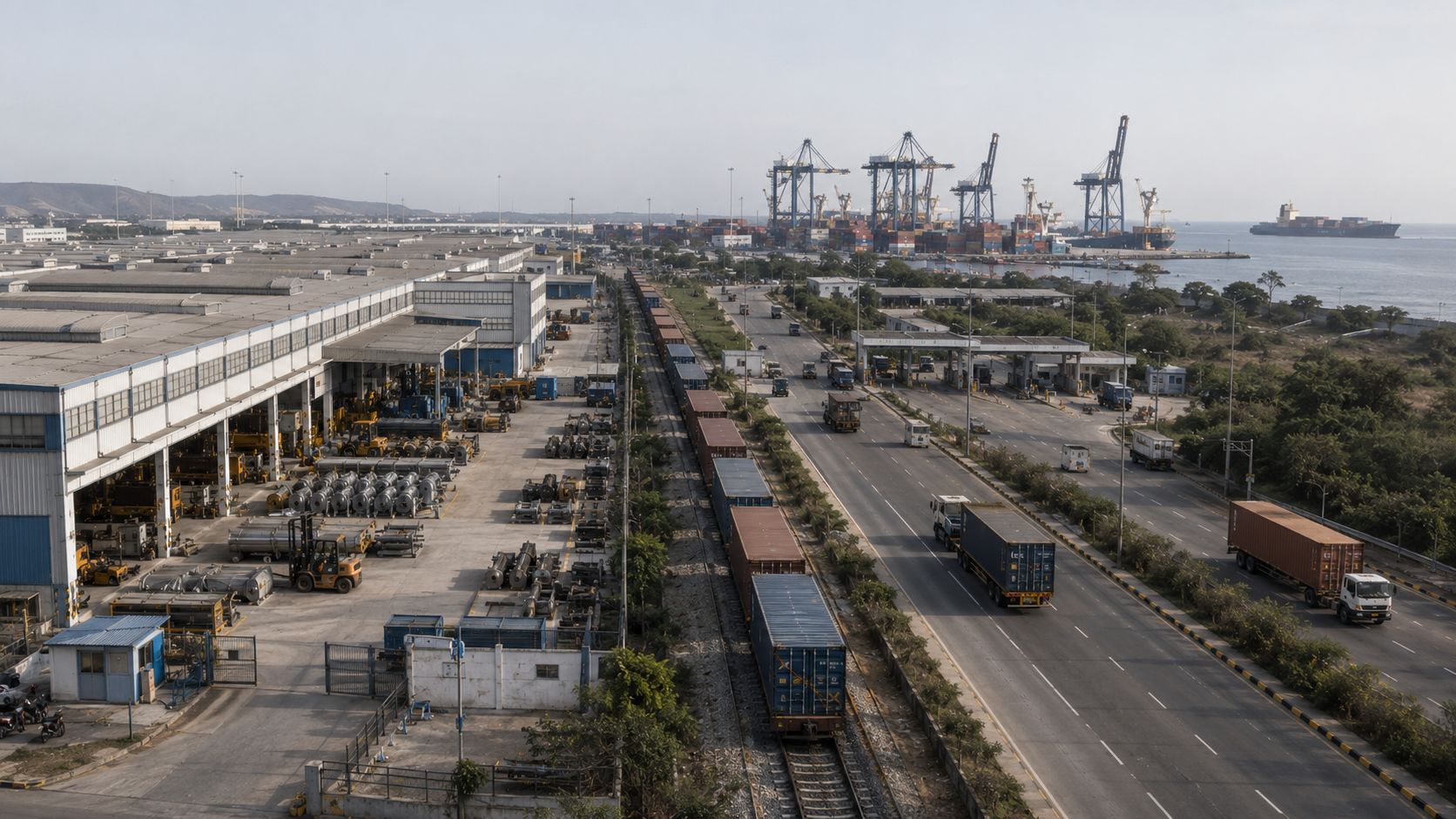
Britain has lowered the tariff. India must now prove that firms can use the preference, deliver reliably and retain the industrial value behind each order.
14 July 2026
Leader Blueprints

Ashima Goyal
Capital & Industrial Policy
Ashima Goyal on patient capital, financial depth, policy stability and the financing conditions needed for long-cycle strategic investment and capability building.
7 October 2026

Dr. Aman Desai
Whole-time Director and Co-founder, Aether Industries Limited · Leader Blueprint
Process intelligence turns chemistry into value.
_,_Gov_1777033329059.jpeg)