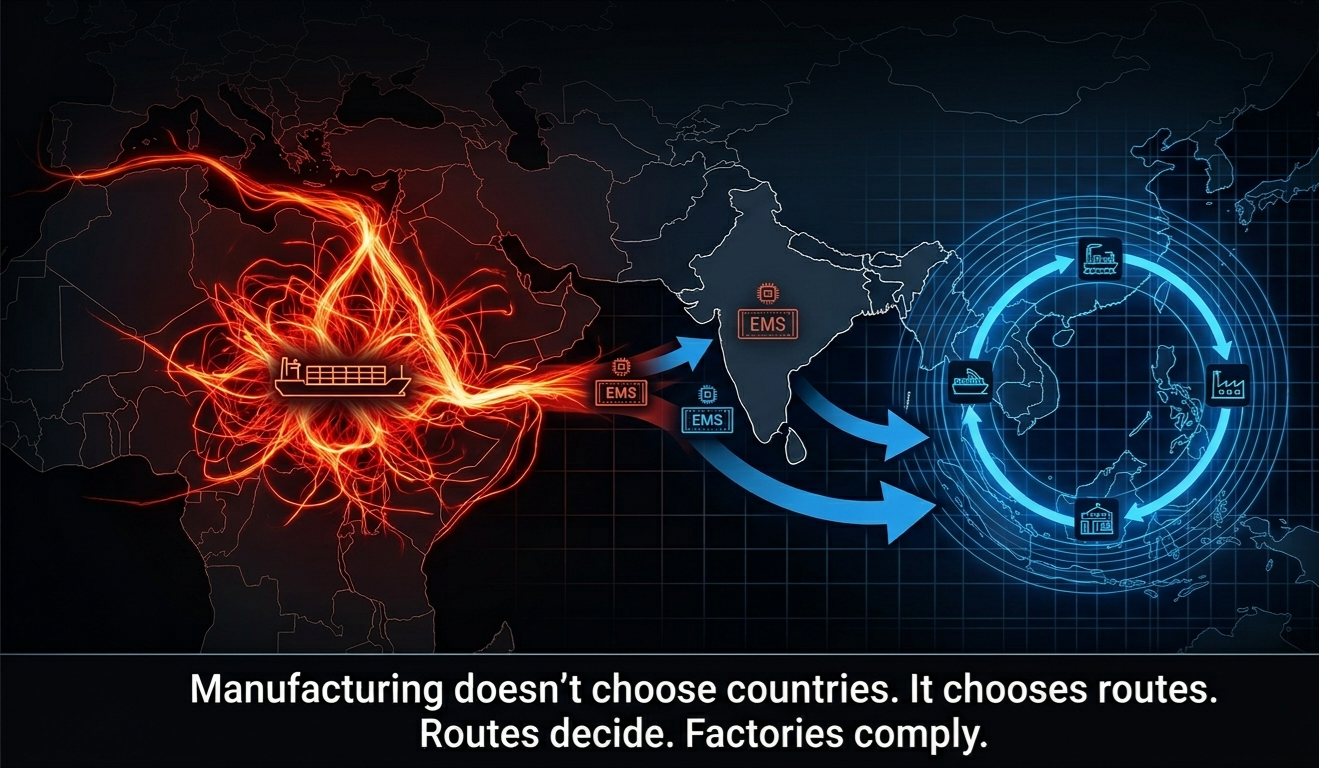
The India–UK Free Trade Agreement—formally the Comprehensive Economic and Trade Agreement (CETA)—takes effect on 15 July 2026. Almost 99 per cent of Indian exports gain duty-free access to Britain.[1][2]
This remains a material gain.
Yet 48.2 per cent of India’s existing export value already entered Britain at zero most-favoured-nation duty before CETA.[3] The remaining tariff wall now falls. Indian firms must use the preference, deliver the order and retain the industrial value behind it.
A shipment can qualify for zero duty and reach the vessel with the advantage already eroded.
Britain improved the terms of entry. The proof moved home.
Conversion decides the gain.
The Claim
Zero duty carries value only when exporters claim it.
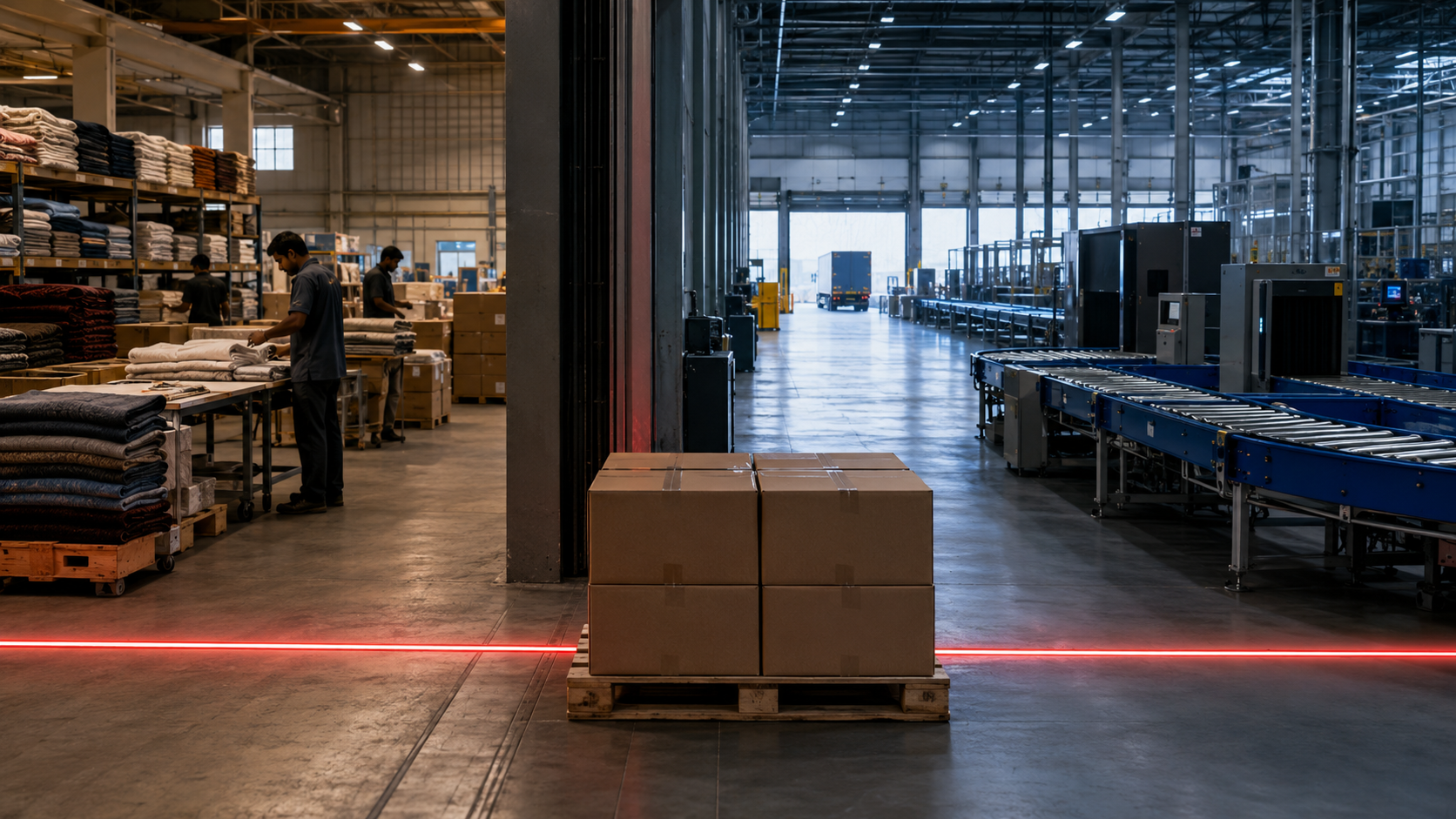
Rules of origin demand evidence. Smaller exporters may face incomplete supplier records, uncertain classifications and savings too modest to justify compliance. Eligible trade can continue under ordinary duty.
Historical research on India's earlier trade agreements placed preference utilisation at roughly 5 to 25 per cent.[4] That history is not a forecast for CETA. It is the reason negotiated access must be measured against actual claims.
India still lacks a reliable conversion record.
The Department of Commerce and DGFT should publish a quarterly CETA ledger by product line, firm size and export cluster. Trade Connect already processes certificates of origin.[5] The ledger must show eligible value, claimed value and trade that continued under ordinary duty.
Weak utilisation should trigger product-level action through export promotion councils: find affected firms, resolve recurring origin failures and connect qualified supply to British demand.
Preference utilisation is the first proof.
The Corridor
The tariff gain can bleed before the vessel sails.
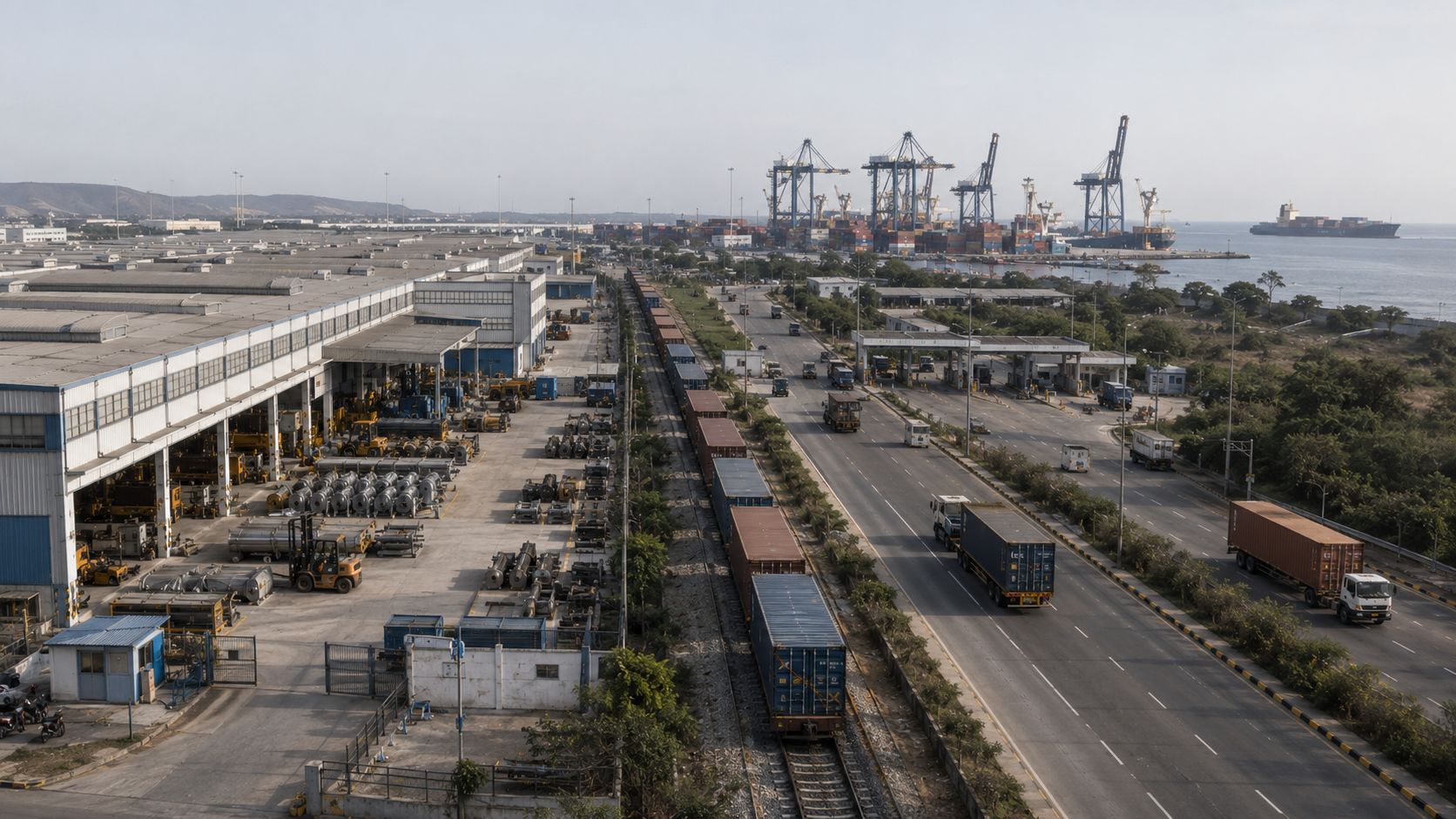
JNPA’s December 2025 data shows trucks carrying 84 per cent of export-container volume, against 16 per cent by rail.[6] NCAER estimates logistics costs at 16.9 per cent of output for manufacturers with turnover up to ₹5 crore.[7]
Every hour lost between factory dispatch and vessel loading reaches the buyer through cost or reliability.
India needs one clock across its priority CETA corridors, joining Logistics Data Bank container movement, ULIP’s cross-government data and PCS 1x port-process records.[8]
The output is complete factory-to-vessel time, with recurring loss located by route. The response should follow the bottleneck the clock reveals.
A corridor clock locates the loss.
The Productive System
Rules of origin qualify the shipment. They do not reveal who owns the system that produced it.
India’s textile and clothing exports already carry 83.2 per cent domestic value added.[9] Across manufacturing, machine tools expose the control still missing behind the shipment.
An Indian component can receive preferential access while its machinery, software, metrology and tooling remain imported.
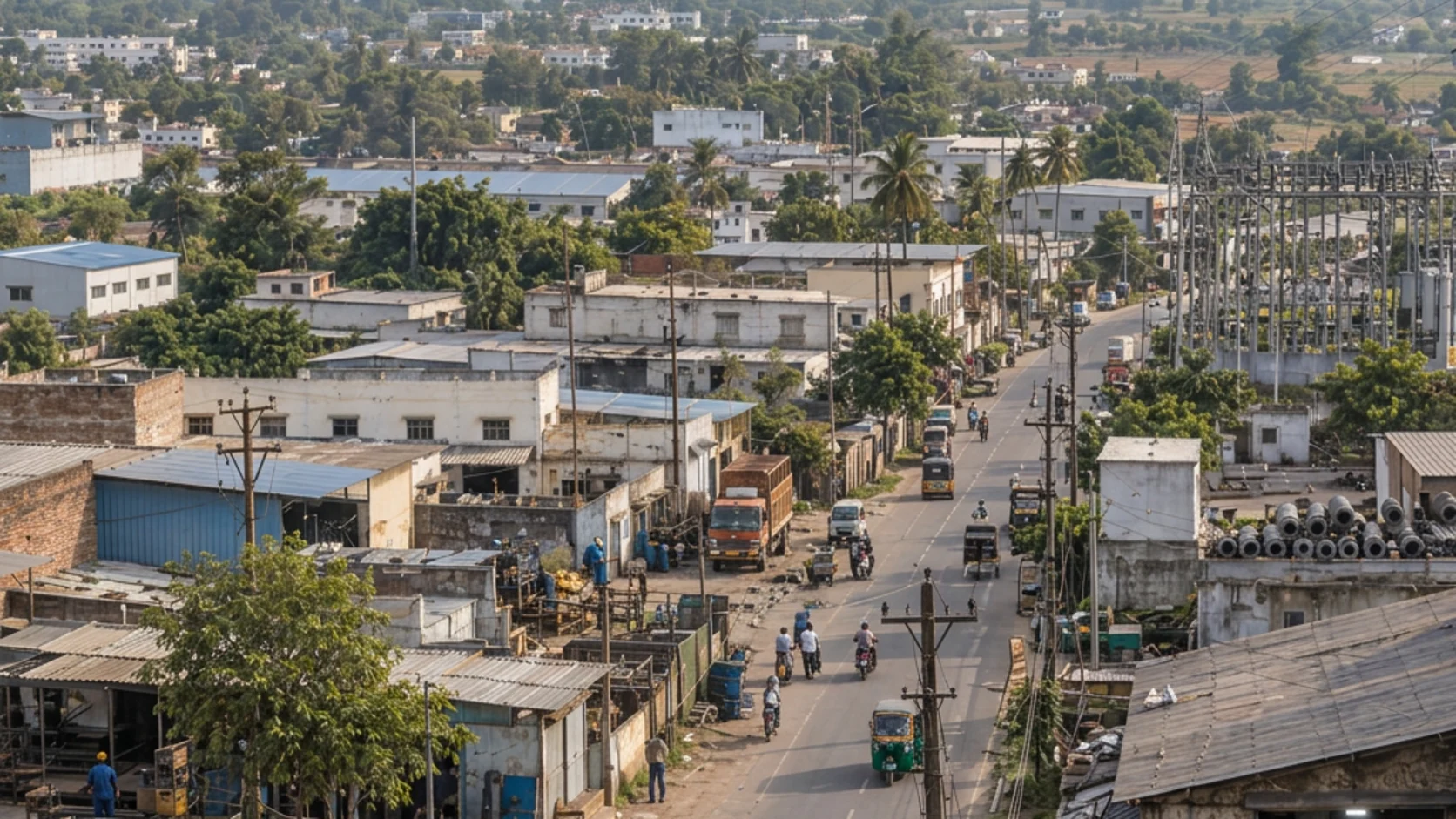
IMTMA places provisional machine-tool production at ₹14,566 crore in FY2024–25 and imports at ₹18,686 crore. Automotive and auto-component manufacturers account for around half of potential demand.[10]
Export growth can deepen Indian capability or leave productive intelligence external.
The Ministry of Heavy Industries should identify imported production systems behind priority CETA exports. Each should become a domestic development challenge backed by an Indian developer, an anchor manufacturer and a testing institution.
Success means a deployable Indian system, domestic service capability and control over the software and technical knowledge that sustain it.
The productive system holds the industrial rent.
The Proof Moves Home
CETA needs three controls: a preference ledger, a corridor clock and a production challenge.
They must reveal how much capability India retains from each export opportunity.
Gross exports cannot reveal that. Shipments may rise while preferences remain unused, freight erodes margins and imported systems capture the deeper return.
The real gain is the capability each order leaves inside India.
CETA lowered the external barrier.
The barrier moved inside India.



_Unnat_Pandit_Controller_General_of_Patents__Desig_1781790929917-DhDfvXvn.jpeg)