The Barrier Moved Inside India
Britain has lowered the tariff. India must now prove that firms can use the preference, deliver reliably and retain the industrial value behind each order.
14 July 2026

Upfront
The DGFT framework lets platform capital enter after a confirmed overseas order. Until then, the Indian SME exporter still finances the stock and bears the loss if demand never arrives.
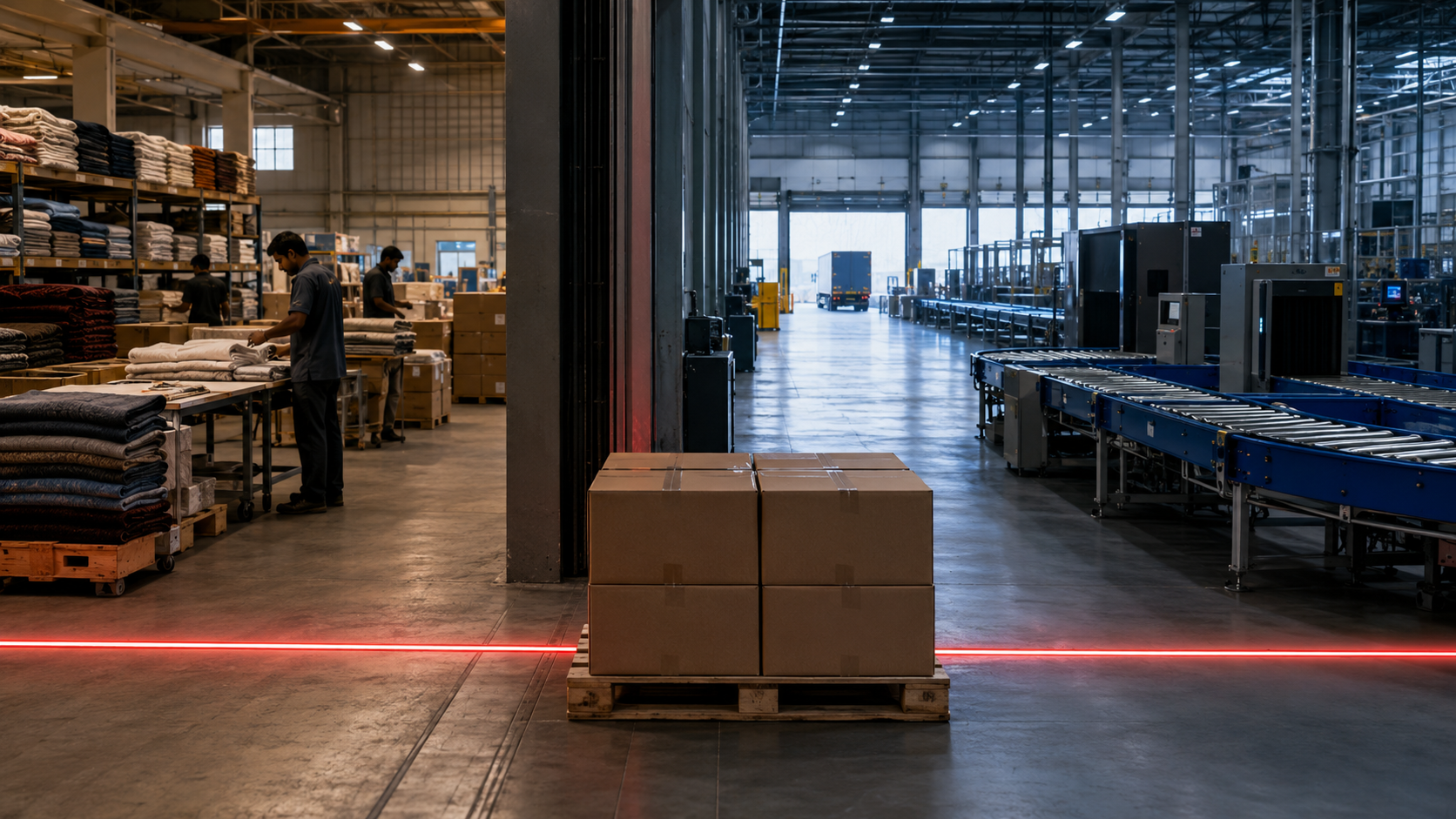
ON 5 AUGUST 2026, the Directorate General of Foreign Trade (DGFT) operationalised its inventory-based cross-border e-commerce framework. A separate Exporter-on-Record, incorporated for a platform's export-only operations, can buy Indian-made goods against a confirmed overseas order and export them in its own name. It assumes documentation, destination-market compliance, logistics and returns, and must pay the Indian seller within seven days of accepting the goods. Speculative inventory accumulation remains prohibited. The reform moves execution after a sale. Platform capital still arrives only once demand has been proven.
A home-textile manufacturer in Panipat must therefore choose between producing ahead of demand and financing unsold stock, or waiting for an order while the buyer waits through manufacturing, clearance and shipping. Long before an overseas order appears, the platform is reading searches, sales and returns across markets. Production in Panipat begins with cash locked into cloth, labour and a finished batch. DGFT's seven-day payment protection starts only after demand has materialised.
India recognises the financing gap. Under the ₹25,060 crore Export Promotion Mission, participating lenders can extend overseas-inventory credit of up to ₹5 crore to eligible MSME exporters, supported by government guarantee cover of up to 75 per cent through the National Credit Guarantee Trustee Company Limited and a 2.75 per cent interest subvention, capped at ₹15 lakh annually. But a guarantee protects the lender, not the exporter. Unsold stock still leaves the small manufacturer carrying the markdown, storage or write-off. The facility lowers the cost of carrying uncertain demand while leaving the resulting commercial loss with the exporter.
China goes further on when goods may leave, though not on who bears the demand risk. Its 9810 customs code allows bulk shipments to enter a registered overseas warehouse before the final customer order, with later sales reconciled through customs data. By May 2024, China had over 120,000 cross-border e-commerce entities and more than 2,500 overseas warehouses; 1,800 served cross-border e-commerce specifically. The country's wider cross-border e-commerce trade had grown more than tenfold in five years. Since January 2025, eligible 9810 exporters can claim their export tax rebate when the goods depart rather than after sale. The system recognises pre-order inventory for customs and tax purposes; it does not determine who absorbs an unsold batch.
The Global Trade Research Initiative (GTRI) compares India's new structure to the export-house model: a larger entity buys from small producers, exports in its own name and pays them in rupees. The platform adds product-level demand data, direct customer access, fulfilment infrastructure and foreign capital. Keeping that capital outside the pre-order period leaves its most consequential capability outside the reform.
The confirmed-order restriction protects a legitimate boundary. The Confederation of All India Traders (CAIT) and GTRI have warned that an export carve-out could become a route for foreign-funded inventory to enter India's protected domestic retail market. The border offers a cleaner line than the order does. Indian ownership can remain absolute while goods remain in the country; platform ownership can begin when they leave.
The Department for Promotion of Industry and Internal Trade (DPIIT) should create a narrow FDI-policy exception for registered Forward Export Purchase Orders, followed by corresponding amendments to the Foreign Exchange Management (Non-Debt Instruments) Rules and the DGFT framework. The Exporter-on-Record would issue the purchase order before production, fixing the product, quantity, price, quality requirements, destination and delivery date. The platform would choose the products and volumes for which its own data justify a commitment. A participating bank could finance the seller against that order, with government guarantee support covering part of the production-stage credit risk.
The seller would retain title and remain liable for conformity, origin and timely delivery during production. Conformity would be verified before shipment. Once departure is recorded in the Export General Manifest, acceptance would become effective, title would transfer and the seven-day payment clock would begin. Overseas storage, pricing, markdown, customer returns and unsold-stock loss would pass with title. Ordinary demand failure could not be charged back to the producer. A controlled pilot could begin with durable, standardised and digitally traceable categories.
Doctrine
Go Deeper
Britain has lowered the tariff. India must now prove that firms can use the preference, deliver reliably and retain the industrial value behind each order.
14 July 2026

India already supplies professional capability globally. Indian firms must now originate mandates, retain clients across markets and earn recurring foreign revenue.
22 September 2026
Existing district programmes now need a common productivity account.
12 September 2026