
Semicon 2.0 Needs a Conversion Engine
The ₹1.27 lakh crore mission spans every major layer of semiconductor production. India's next test is whether those layers can strengthen one another.
17 July 2026
UPFRONT
At SEMICON India 2026, design, materials, fabrication and packaging are beginning to connect; the next proof of scale is whether suppliers qualified through early projects can win new customers.
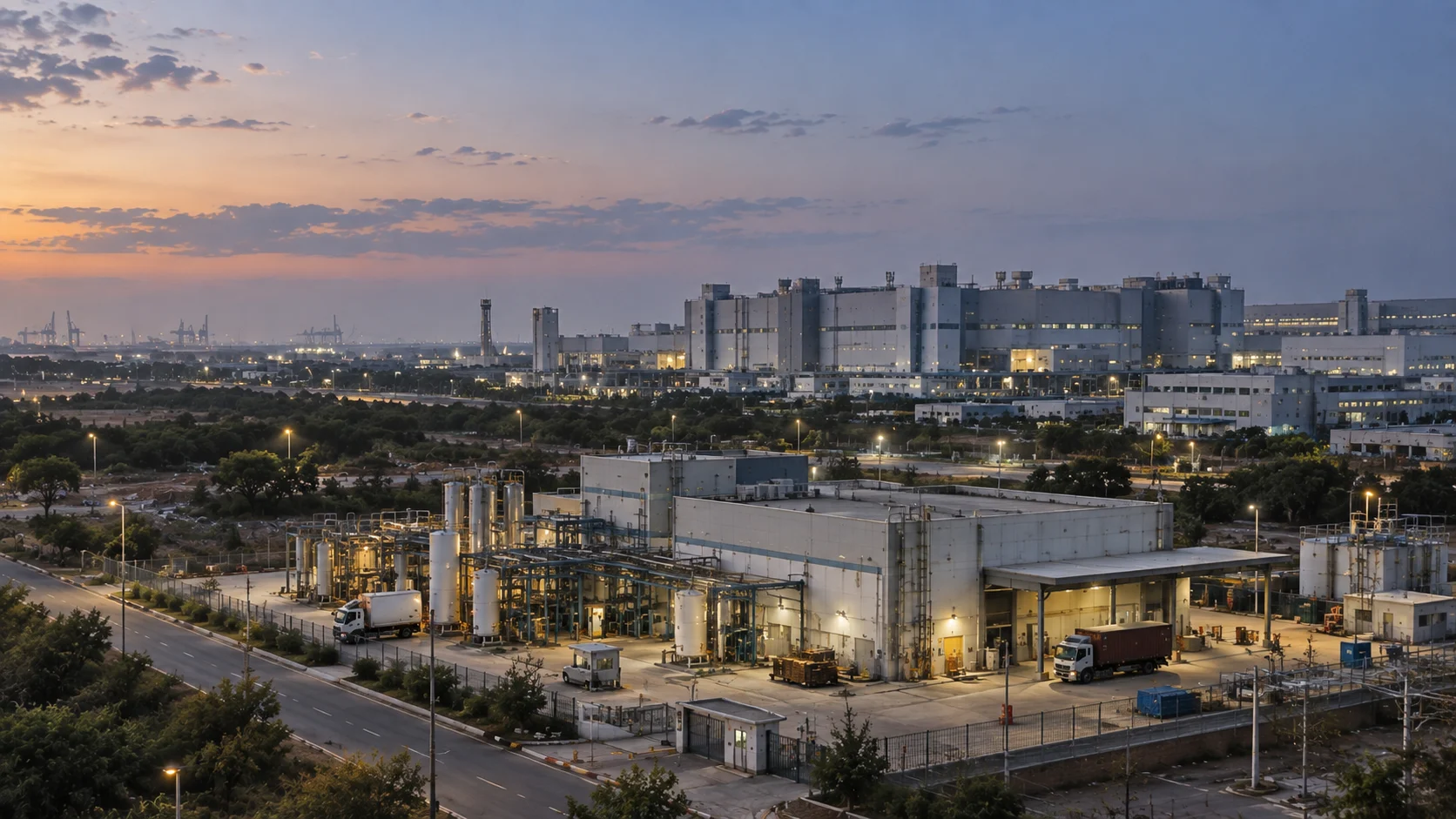
SEMICON India on 17 September 2026 brought several parts of Semicon 2.0 into the same industrial frame. Ashwini Vaishnaw set out six pillars — design, equipment and materials, fabs, advanced packaging, applied R&D and talent. The programme had been approved in July 2026 and all six pillars notified on 31 August 2026; this week’s partnerships showed more of those links moving from policy architecture into industrial relationships.
Nexperia and Tata Electronics are laying the groundwork to produce Nexperia’s metal-oxide-semiconductor field-effect transistor (MOSFET) portfolio at Dholera, with assembly and test collaboration in Assam. Tata is also working with Fujifilm on semiconductor materials and with Besi on advanced packaging. Beyond Tata, Applied Materials plans to expand its India-based supply-chain capacity tenfold by 2035, while L&T Semiconductor Technologies has unveiled a 40-product portfolio, including its first silicon carbide (SiC) platform.
A supplier may clear qualification at one fab and still have only one buyer. Packaging suppliers already have other Indian assembly and test plants to sell into. Fab-grade materials and precision components have fewer domestic customers to sell to. With Dholera set to become India’s first commercial fab, the next customer may need to be overseas.
Qualification is where technical ability meets a customer’s process requirements. After Japan tightened semiconductor-material export controls in 2019, South Korea helped local suppliers test materials against Samsung and SK Hynix requirements. Domestic production alone was not enough. In Taiwan, TSMC began with technology, equipment and staff transferred from a public research institute; in 2025 it served 534 customers.
Once a supplier wins business beyond its first customer, fixed qualification and validation costs can be spread across larger sales volumes and investment is less exposed to one project’s demand.
In Semicon 2.0 Needs a Conversion Engine, published in July 2026, India Front argued that the programme should measure qualification, yield, repeat procurement and retained suppliers. Those measures still show whether qualification turns into reliable, repeat production.
India Semiconductor Mission should help suppliers reach the production environment where qualification actually matters. For packaging suppliers, that may be an Indian assembly and test line; for fab materials and precision components, it may be a partner fab or equipment company overseas. ISM should then track whether that qualification leads to repeat orders and additional customers.
India can use public capital to help establish its first commercial fab, develop suppliers and reduce the cost of qualification. By 2047, scale will depend on suppliers winning business beyond the projects where they were first qualified.
Doctrine
More from Upfront
The ₹1.27 lakh crore mission spans every major layer of semiconductor production. India's next test is whether those layers can strengthen one another.
17 July 2026
Existing district programmes now need a common productivity account.
12 September 2026
India should map its future machinery demand early enough for domestic suppliers to develop, qualify and compete before procurement begins.
3 September 2026