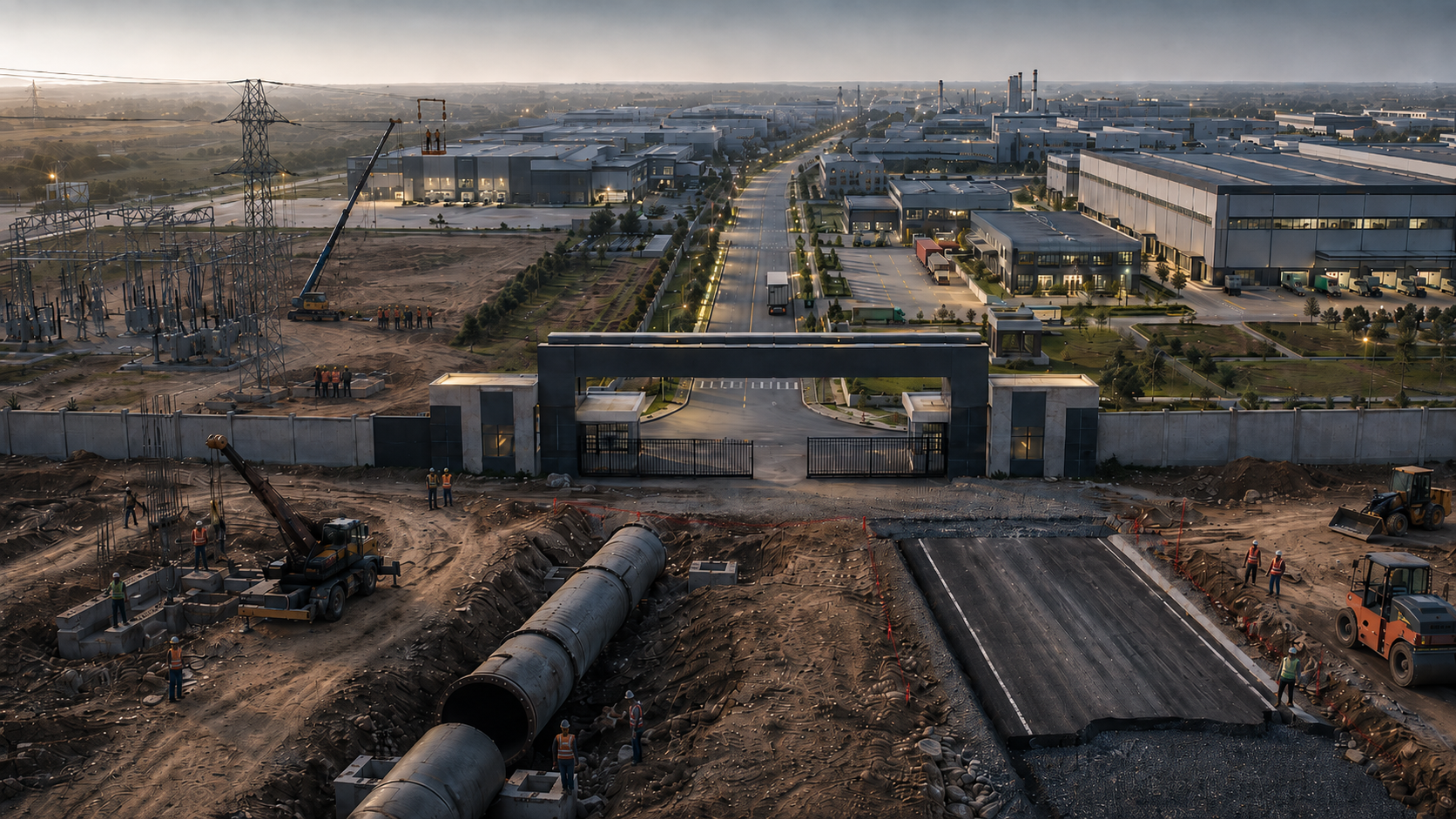
BHAVYA's Choke Sits Outside the Gate
BHAVYA can keep park construction moving through external delays. Its first factories can switch on only when power, water and connectivity arrive with them.
18 August 2026

UPFRONT
Under the draft SHANTI Rules, Rule 5 lets prospective nuclear developers negotiate with vendors and acquire land before the state identifies who will take each regulatory, site and commercial decision, through what process and by when. It should become a bankable Project Development Approval without promising the final licence.
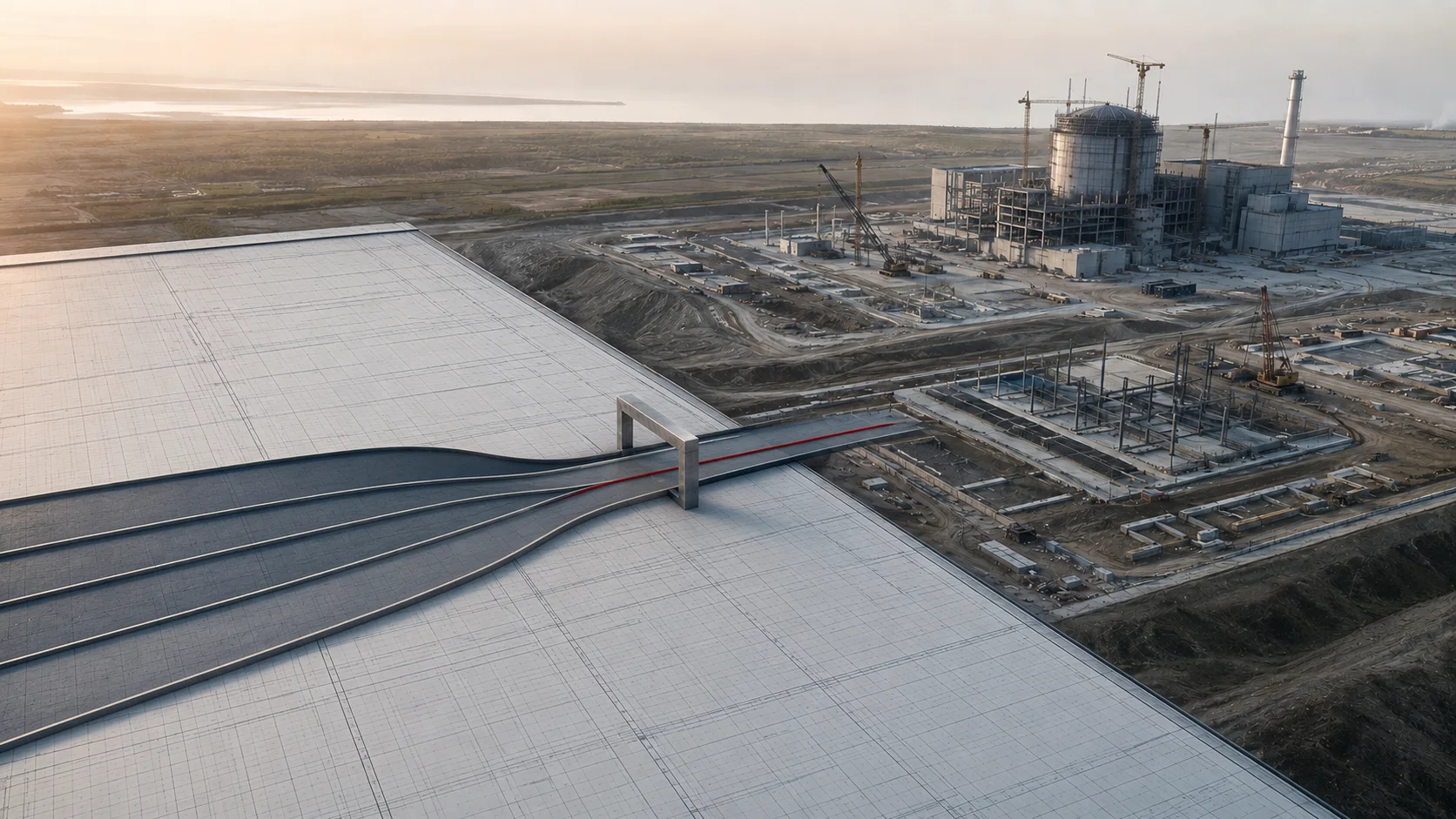
The SHANTI Act has opened nuclear power to private participation, and the draft rules will determine how an applicant reaches a licence. The Department of Atomic Energy (DAE) has invited industry, institutions, experts and the public to propose changes before it finalises the rules. Submissions close at 8 p.m. on 4 September. The final rules must support a rise in nuclear capacity from 8.78 GW today to 100 GW by 2047, with a government panel estimating the investment requirement at ₹19 trillion and TERI placing it at ₹23–25 trillion. The rulebook must keep nuclear-safety approvals with the regulator while giving private capital a defined basis for funding project development.
The draft’s basic licensing architecture is sound. It creates one composite licence covering construction, ownership, operation and decommissioning. Safety authorisations from the Atomic Energy Regulatory Board (AERB) remain staged at siting, construction, commissioning and operation. The choke point sits before the formal licence, inside Rule 5.
Inside Rule 5, permission to spend precedes the clarity required for financeability. After an application is admitted, the licensing authority may issue a “statement of support” even when the site or technology remains unselected, allowing vendor negotiations and land acquisition. The approval carries no applicable design-review pathway or decision period. Rule 32’s 180-day licence clock is conditional on every requirement being fulfilled and does not govern design review. Rule 106 leaves tariff methodology to a future determination based on a Central Government committee’s recommendations.
Rule 5 need not guarantee a licence. Its defect lies in leaving the public-policy risks between a company’s interest and a lender’s signature.
Doctrine
Rule 5 should become a Project Development Approval issued by the licensing authority, with four annexes that turn support into an executable project path.
The regulatory annex would record the applicable design-review sequence, evidence requirements and review stages identified by AERB. The site annex would record the site-selection route, any preliminary concurrence, outstanding studies and the government responsible for land action.
The commercial annex would identify the procurement or tariff route, the deciding authority and the treatment of costs, indexation, fuel, spent-fuel obligations, liability and decommissioning.
The decision annex would consolidate the timetables committed by the responsible authorities, define information requests and establish stop-clock rules. At this stage, bankability means that each identified public-policy risk has a responsible authority, a method for reaching a decision and a timetable.
The licensing authority defined under Rule 2(19) — a Central Government officer of at least Joint Secretary rank, not AERB — should issue this approval. AERB would provide a non-binding note identifying the applicable regulatory route at this stage, while retaining full authority over design approval and every subsequent safety authorisation.
For DAE, the approval would convert admitted applications into a visible project pipeline, showing each project’s status and the authority responsible for every unresolved decision before land and capital are committed.
Canada lets design review begin before licensing without turning it into pre-clearance. Its regulator certifies no design and binds no later decision. Britain draws the boundary across institutions. The Office for Nuclear Regulation examines reactor design through its voluntary Generic Design Assessment, while Ofgem regulates designated RAB projects. Canada’s pre-licensing review and Britain’s separation of technical and economic decisions provide early clarity without pre-empting later licensing decisions.
This would strengthen project development without diluting AERB’s authority. In the final rules, Rule 5 should give developers, financiers and responsible public authorities a common route for advancing a credible project, while leaving the final licence to the statutory process. That correction fits inside a rule that already exists.
Comments on the Draft SHANTI Rules close at 8 p.m. on 4 September 2026, submitted in the prescribed format to feedback.shanti@dae.gov.in.
Go Deeper
BHAVYA can keep park construction moving through external delays. Its first factories can switch on only when power, water and connectivity arrive with them.
18 August 2026

BHAVYA Rasayan will spend ₹3,000 crore on common infrastructure across three chemical parks. Their advantage will depend on binding performance standards, funded operating readiness and one accountable authority.
28 July 2026
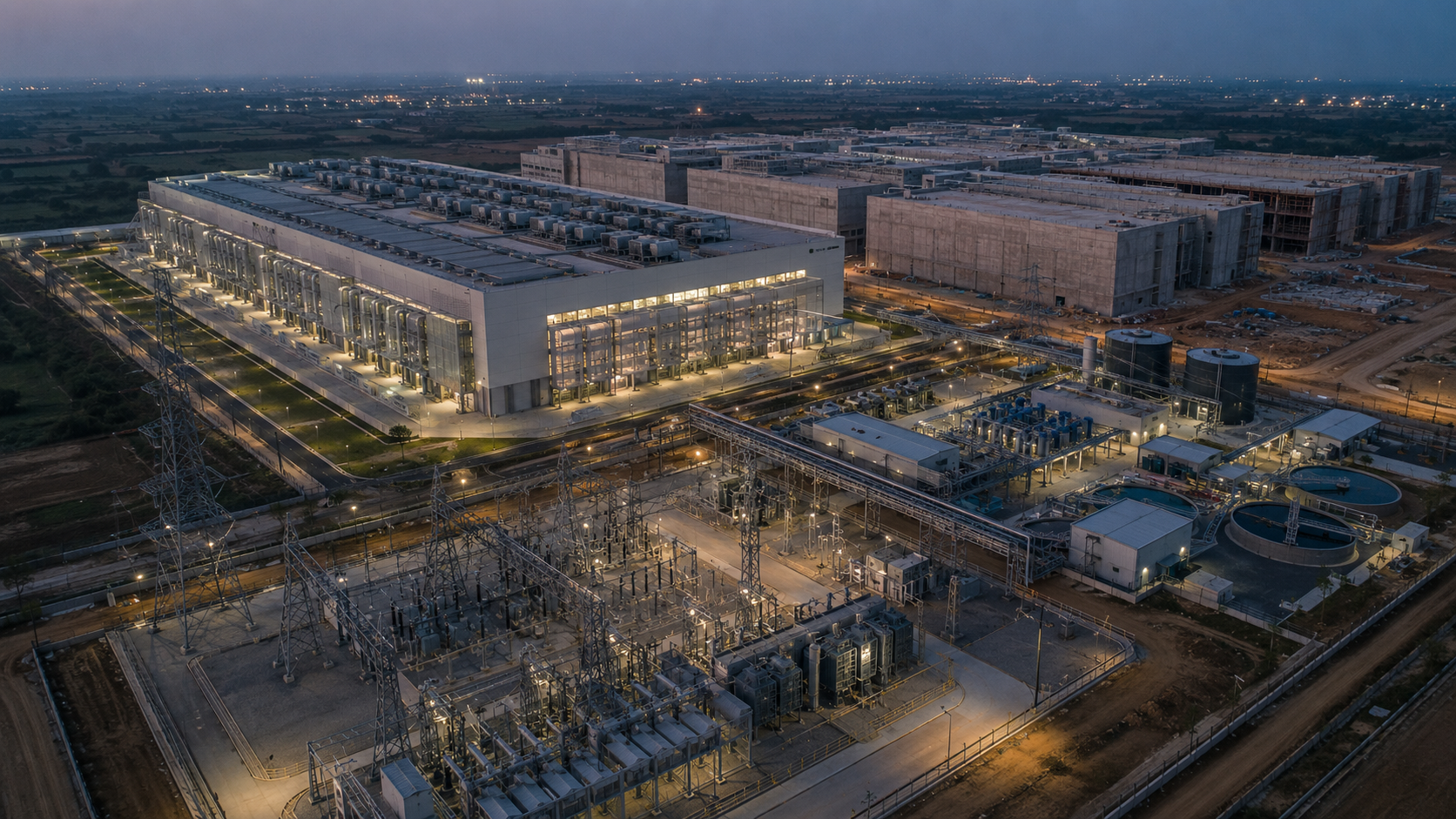
India's AI build-out needs more than land and servers. Every large campus must show that power, water and supporting infrastructure can carry its full operating load.
7 August 2026
Leader Blueprints
Ashima Goyal
Capital & Industrial Policy
Ashima Goyal on patient capital, financial depth, policy stability and the financing conditions needed for long-cycle strategic investment and capability building.
7 October 2026
Dr. Akhilesh Gupta
Former Secretary, SERB; Former Senior Adviser, Department of Science and Technology, Government of India · Leader Blueprint
Translation turns knowledge into national capability.