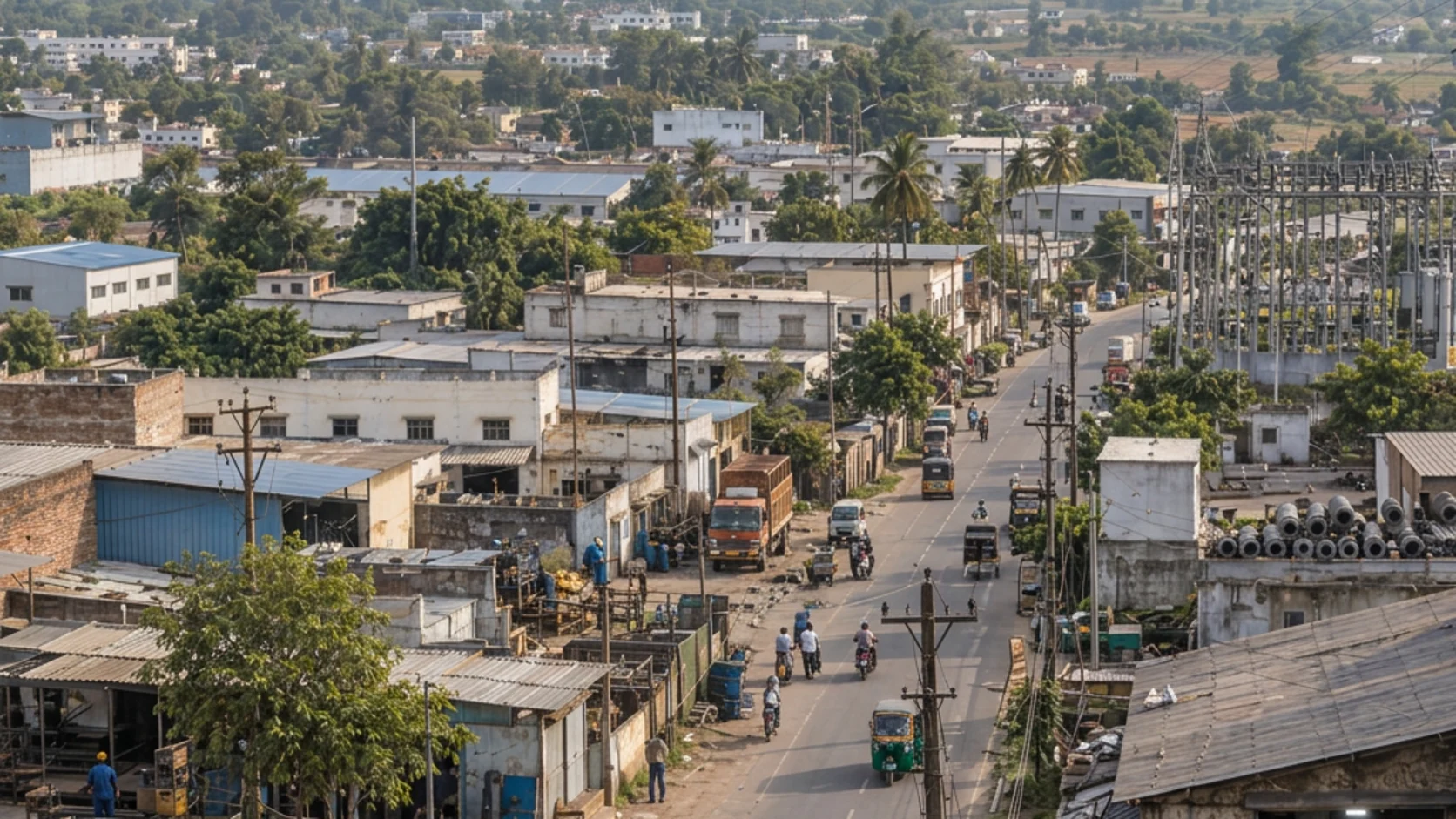
THE CENTRAL ELECTRICITY Regulatory Commission (CERC) has proposed transmission-charge waivers for solar, wind and hybrid projects delayed by unavailable transmission. The draft would restore part of the waiver being phased out since July 2025 for projects meeting defined contract conditions. Solar curtailment reached 8,133 gigawatt-hours (GWh) during April–June. Parliament was also told that about 12 gigawatts (GW) of clean-energy capacity could not supply full power and about 21 GW was operating through temporary connections. The proposal recognises the financial cost only after delay has imposed it. Current public reporting lacks a common measure that exposes the mismatch earlier.
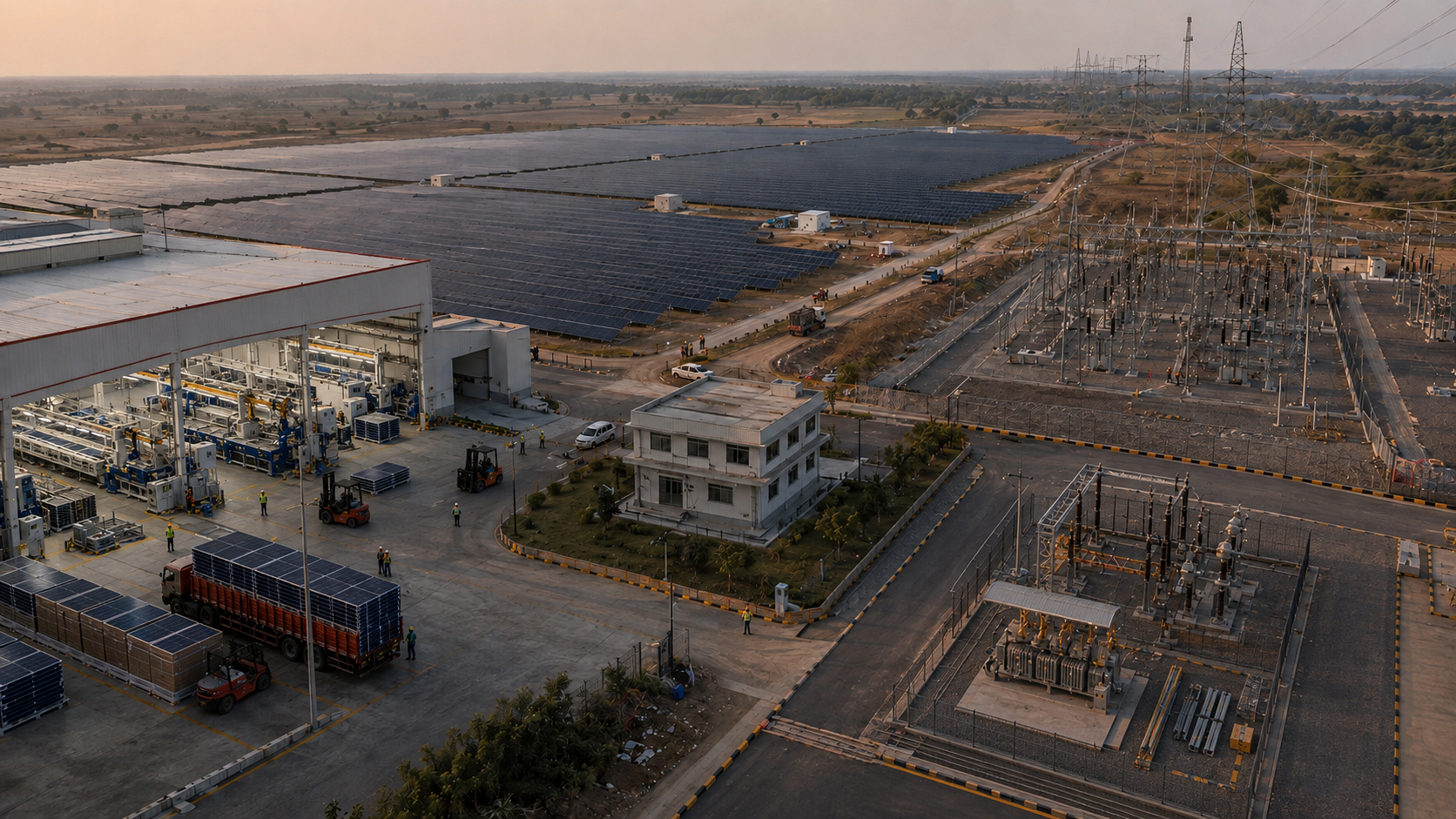
The gap also appears upstream. India records roughly 200 GW of stated module capacity. Modules are the downstream product; cells are their core input. The Approved List of Models and Manufacturers (ALMM) is the government's eligibility list for solar-cell models and manufacturers used in covered projects. Its 22 July revision records 31.758 GW of enlisted annual cell capacity. EUPD Research and industry sources place effectively operating cell capacity at 16–18 GW. The figures describe different industrial states. The published material reviewed here does not connect them to audited production, utilisation, domestic dispatches or demand from projects covered by the mandate.
These records are separate because responsibility is divided by stage. The Ministry of New and Renewable Energy (MNRE) determines eligibility under ALMM. Procurement agencies award projects; developers meet contractual commissioning milestones. Transmission bodies complete network assets; grid operators protect system security. Each record serves a valid statutory, regulatory or contractual purpose. The failure emerges where those mandates meet. No public reporting system assigns responsibility for the complete delivery chain. Institutions can close their own numbers without proving delivery across the chain. Manufacturing scarcity and transmission constraints arise at different stages, but both remain enclosed within stage-specific records. CERC's proposal addresses the transmission cost only after the mismatch surfaces.
The United States calculates its Section 45X manufacturing tax credit for eligible components produced and sold. The credit therefore rests on a completed commercial event. Australia's connection process requires detailed commissioning programmes, performance tests, daily test records and hold-point reports. The Australian Energy Market Operator and the connecting network service provider review that evidence before releasing a plant into operation. Public policy can place proof closer to delivered performance.
MNRE and the Ministry of Power should establish a quarterly Solar Delivery Protocol, published by MNRE and built around two tests. Audited returns would support manufacturing; the Central Electricity Authority (CEA) would compile power-delivery data from transmission and grid-operation records. Manufacturing reporting would cover ALMM-enlisted capacity, audited cell production, utilisation, domestic dispatches, order lead times and demand from covered projects. A future localisation phase would begin when a pre-announced supply-coverage threshold held over consecutive quarters. Investment certainty requires fixed review dates, a published method, a maximum deferral and independent audit of the threshold calculation before each phase. Power reporting would cover legally commissioned solar capacity, permanent and temporary connections, transmission-linked curtailment, projects receiving charge relief, the missing network asset and revised ready date. Separate triggers would prevent transmission delay from determining cell-localisation policy.
The economic friction is immediate. Module makers face input scarcity and uncertain production cycles. Workers face fewer shifts when lines slow. Developers carry financing and project-delay costs; generators lose revenue when electricity cannot move. India recorded 162.15 GW of installed solar capacity on 30 June 2026. Central Electricity Authority projections place the 2030 level above 292 GW—roughly another 130 GW from the June base. India's next 130 GW must draw on deeper qualified domestic cell supply and deliver more electricity reliably to the grid.