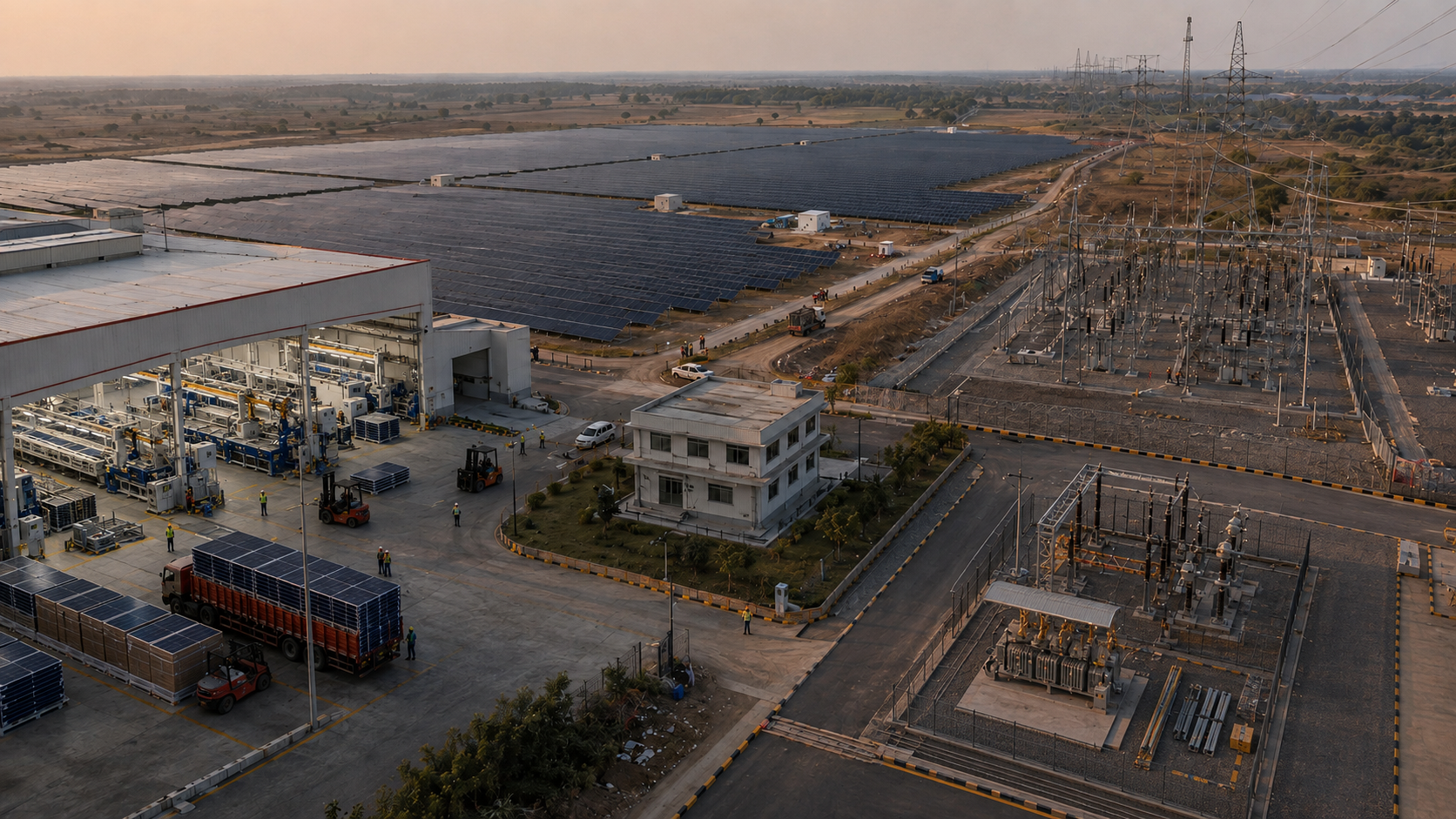
Solar Delivery Needs an Owner
India measures each stage of solar delivery separately, but no institution is responsible for proving the complete economic result.
4 August 2026

UPFRONT
China proposes controls on selected polysilicon technologies as India prepares support for its first commercial plants. Public capital must account for the process rights a supplier can legally deliver.

On 16 October, China proposed prohibiting or restricting exports of 12 specified solar-manufacturing technologies. Covered transfers now require pre-export registration; the catalogue changes remain under consultation until 15 November. The measures reach selected polysilicon, wafer and cell processes, not finished panels. For an Indian investor, delivery of a reactor does not establish the right to receive the process knowledge required to commission it or improve its output.
On 20 October, MNRE disclosed Finance Ministry approval in principle for a polysilicon support scheme, with Cabinet clearance still pending. India aims for 30 GW of domestic capacity by 2030, requiring an estimated ₹25,000 crore in investment. No commercial polysilicon plant currently operates in India. ORF America estimates an 18–30-month journey from project announcement to commissioning, followed by further ramp-up. China's proposal includes prohibitions on specified fluidised-bed technologies and restrictions on engineering for certain large polysilicon lines. Whether an Indian project crosses those process and capacity thresholds remains unverified. The route chosen will determine reactor design, electricity demand and silicon purity. Changing routes after equipment orders brings a fresh engineering and qualification bill.
In July, six Indian solar manufacturers told Reuters that Chinese equipment and technology curbs would delay their planned cell factories. They requested anonymity, fearing reprisals. CEEW finds that newer Indian TOPCon cell lines take almost a year to optimise; domestic cell manufacturing costs nearly 40 per cent more than China's. An Indian industry source told OPIS that solar-equipment contracts often make final payment conditional on successful commissioning. Until output meets specification, power, materials and finance consume cash while the production line yields fewer saleable cells. Those findings concern cell factories. Polysilicon requires its own process-specific exposure test before investment, with no presumption that its projects face the same restrictions.
In 2019, Japan tightened licensing of three semiconductor materials exported to South Korea. Korean firms preserved authorised imports, qualified other sources and expanded domestic production. Japanese hydrogen-fluoride exports fell sharply; the other two materials showed no comparable decline. Korea had the engineering base to test substitute inputs. Replacing a proprietary polysilicon process is a different undertaking, involving reactor design, material purity and commercial qualification.
The supplier contract sets out the technical assistance owed. Chinese law determines whether controlled know-how is transferable. MNRE cannot issue the foreign authorisation. Contract damages cannot commission a reactor or recover months lost to redesign. The financial exposure belongs to investors and, where public support is committed, to the Indian state. India's June 2028 wafer rule requires three independent producers with 15 GW combined before the first approved list. It cannot settle a polysilicon technology permission.
India controls the design of its pending polysilicon scheme. Its appraisal rules need evidence of the proposed production route, technology licensor, applicable export permissions and enforceable commissioning and upgrade support. Any replacement process needs qualification against purity, energy use, capital cost and time to commercial output. For an exposed proposal, appraisal must decide whether to secure lawful access, change the investment sequence or reject an uneconomic process. That decision belongs before public commitments become irreversible. Industry bodies can give Commerce aggregated questions without naming firms publicly. Chinese exporters remain responsible for their own registrations and applicable licence applications. Projects outside the controlled specifications retain normal appraisal.
Polysilicon purity and electricity consumption determine the cost of material entering India's wafer industry. Expensive domestic inputs pass through cells and modules into solar-project economics. Public support must be judged by competitive output and continuity of production.
Doctrine
Go Deeper
India measures each stage of solar delivery separately, but no institution is responsible for proving the complete economic result.
4 August 2026
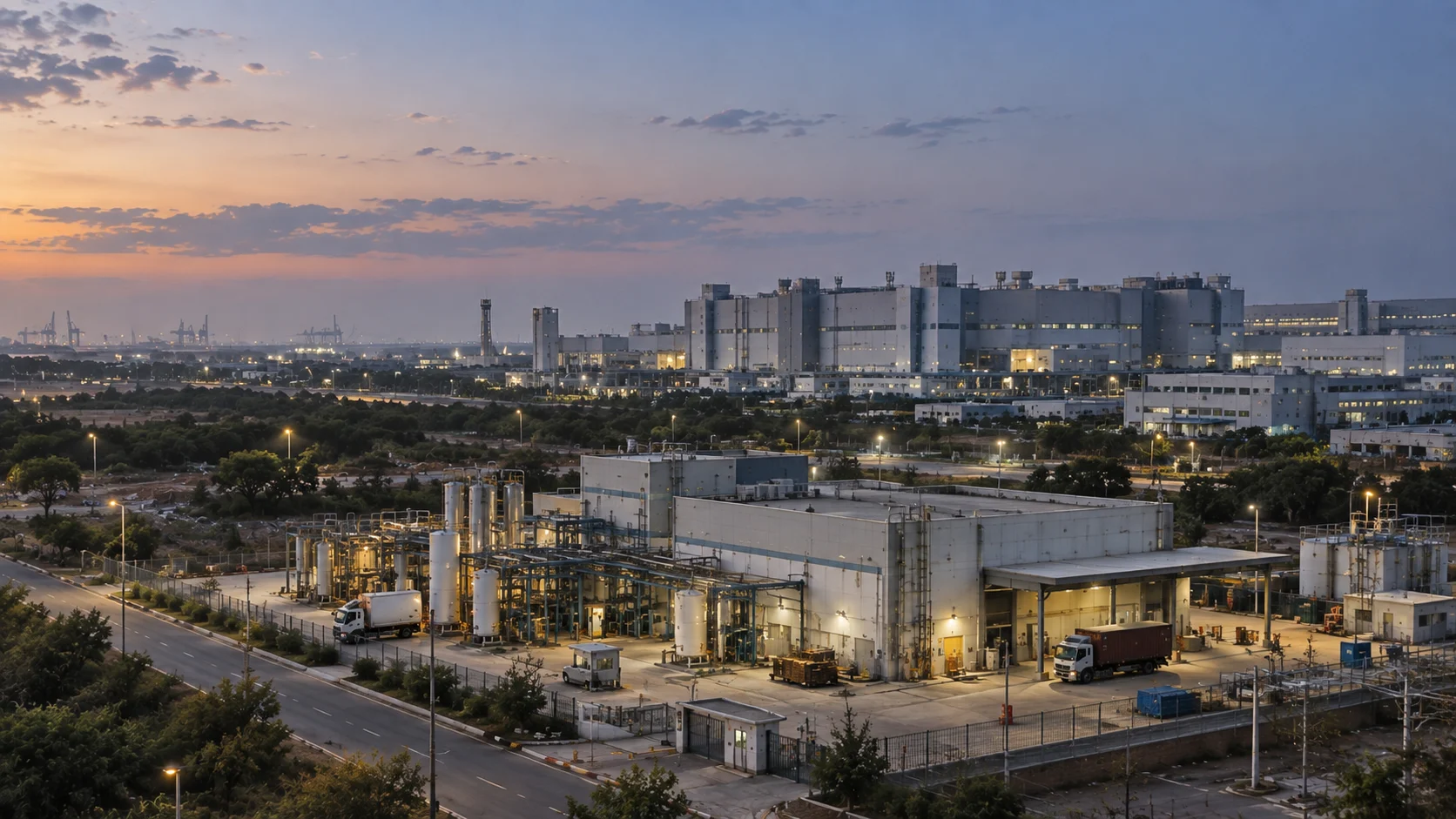
At SEMICON India 2026, design, materials, fabrication and packaging are beginning to connect; the next proof of scale is whether suppliers qualified through early projects can win new customers.
18 September 2026
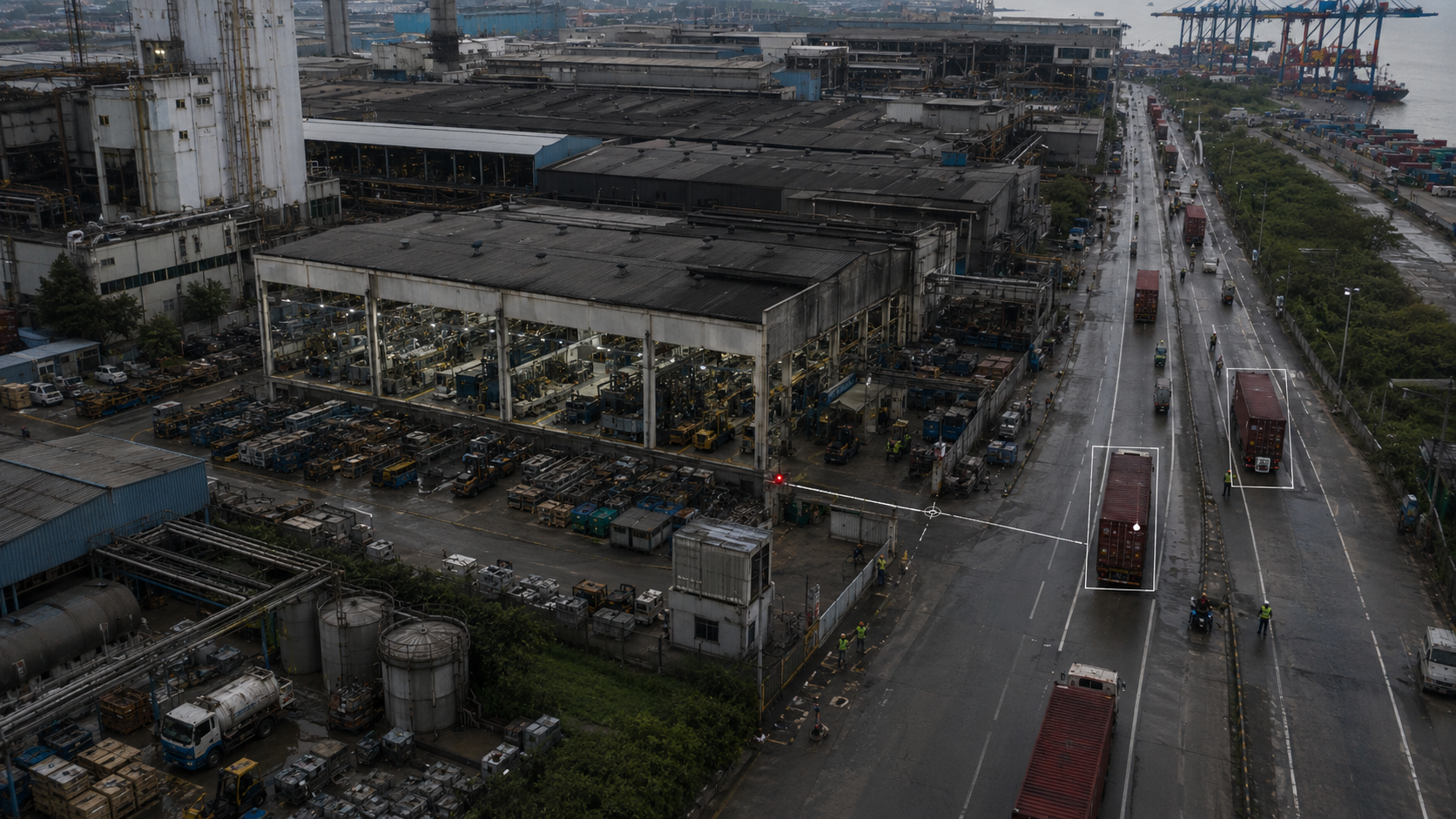
WTO members are questioning India's production incentives, quality controls and import-substitution measures. Defending India's policy space is one task. Proving what those interventions create requires a harder scoreboard.
24 July 2026
Leader Blueprints

Dr. Aman Desai
Whole-time Director and Co-founder, Aether Industries Limited · Leader Blueprint
Process intelligence turns chemistry into value.
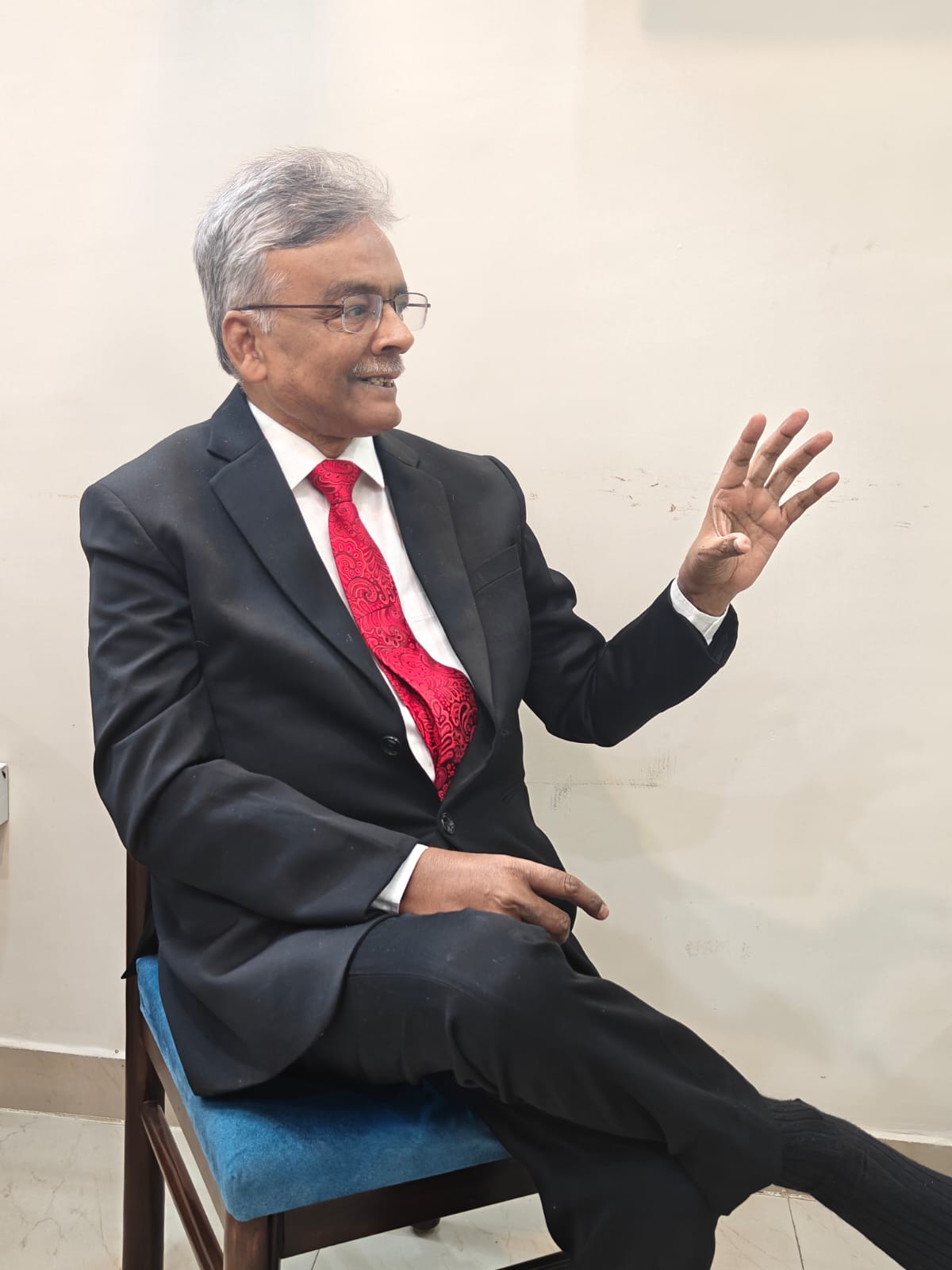
Dr. Akhilesh Gupta
Former Secretary, SERB; Former Senior Adviser, Department of Science and Technology, Government of India · Leader Blueprint
Translation turns knowledge into national capability.