Issue 6 · Feature · Defence & Strategic Technology

Own the Evolution

A defence technology that has been successfully developed has already created strategic technological capability. Dr G Satheesh Reddy asks whether India can then take that technology into production, sustain it through years of service and retain the ability to change it as requirements evolve.

2 min read

Prototype success proves that a system works. For Reddy, maturity means the system can be produced at useful scale, perform reliably across different operating environments, and become part of how the Armed Forces train, operate and support it. “Will it remain dependable, affordable, and sovereignly maintainable for the next 20–30 years while we own the evolution path?” Reddy asks.

He calls for industrial absorption: industry able to build, integrate, support and improve the technology after development. This requires advanced manufacturing, systems integration and the engineering depth to modify a design, substitute a critical component and carry out upgrades.

Industry, he says, must be able to “evolve designs, not just manufacture to print”. “Manufacture to print” means building from an established set of drawings and specifications. Indian industry must understand the system well enough to change it when necessary. Without that depth, even excellent technologies can remain low-volume, expensive or dependent on foreign support.

Moving from development into sustained production requires demand, procurement timing, skills, production capacity and a reliable supply chain to come together. Reddy does not describe the move from prototype demonstration to sustained production as an Indian failure. Every technology and every country has to pass through that transition.

Research and development should be planned from the beginning with production, sustainment and future evolution in view. Mature technologies can move from research organisations into public and private industry only when companies can carry them through production and service. Domestic suppliers and alternative sources for critical inputs are part of that hand-off.

Strategic ownership weakens when India cannot modify or upgrade a critical part of a system without authority or knowledge held abroad. Reddy points to aero-engines and other critical subsystems and materials where such dependence can remain.

“When core performance or modification/upgradation authority rests outside sovereign control, strategic ownership gets impacted,” he says.

Indigenous content alone cannot establish strategic ownership. A system may contain substantial Indian production while authority over a critical design change or upgrade remains elsewhere. India must be able to sustain, modify and upgrade the system throughout its working life.

Reddy calls this “lifecycle sovereignty”: Indian industry carrying a successfully developed technology into production, supporting it for decades and retaining control over how it evolves.

Sovereignty requires authority over the next upgrade.
Issue 6

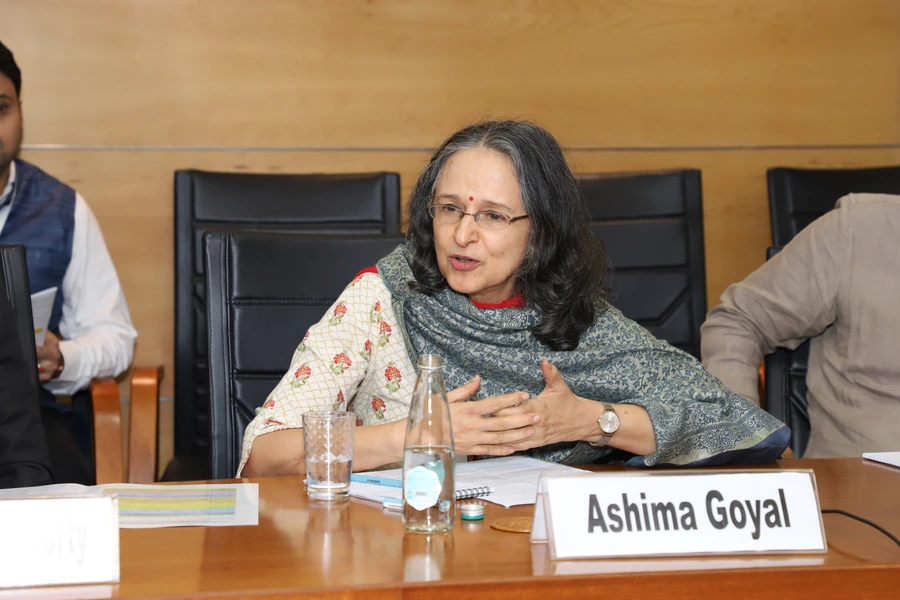
Ashima Goyal

Leader Blueprint · Capital & Industrial Policy

Finance Must Last Until Capability Is Built

Long-cycle strategic investment can take years before returns arrive. For Ashima Goyal, the financing challenge is whether capital can stay committed through that period at a cost the project can bear.

7 Oct 2026 · 3 min read

Leader Blueprint · Defence & Strategic Technology

Defence Indigenisation Must Close the Process Capability Gap

India’s defence sector has moved rapidly on indigenisation. More than 15,700 defence items have been indigenised through SRIJAN over the past five years, with estimated import substitution of about ₹9,000 crore. In August, another 405 strategically important items were placed on the Department of Defence Production’s sixth Positive Indigenisation List.

7 Oct 2026 · 3 min read

Leader Blueprint · Defence & Strategic Technology

Defence Sovereignty Requires Design Continuity

Lieutenant General P.R. Shankar, former Director General of Artillery, argues that India’s next defence-industrial test begins after induction: whether field use improves the system, known faults are corrected and the learning reaches the weapon that follows.

7 Oct 2026 · 5 min read

N. Manoharan, Director General of the Directorate General of Quality Assurance

Leader Blueprint · Defence & Strategic Technology

In Defence Production, Quality Is Repeatability

N. Manoharan, Director General of the Directorate General of Quality Assurance, argues that defence-manufacturing capability is established when proven performance can be reproduced across production batches, suppliers and years of use.

7 Oct 2026 · 3 min read

Feature · Defence & Strategic Technology

The Drawing Is Not the Factory

India can transfer defence production into industry. The handover is proven when the approved design changes—and industry carries the engineering.

8 Oct 2026 · 4 min read

Defence Law · Defence & Strategic Technology

Indigenisation Closes at Qualified Use

A critical defence material is not indigenised because India can produce it. The Indian production route must be qualified for the military application that depends on it.

8 Oct 2026 · 1 min read

Defence Law · Defence & Strategic Technology

Indigenisation Must Reach the Support Chain

Su-30MKI production moved into India before its support chain did.

8 Oct 2026 · 2 min read

Defence Law · Defence & Strategic Technology

Replenishment Must Be Proven Before It Reduces War Stocks

War-stock planning can credit Indian production only at a replenishment rate India has proved.

8 Oct 2026 · 2 min read