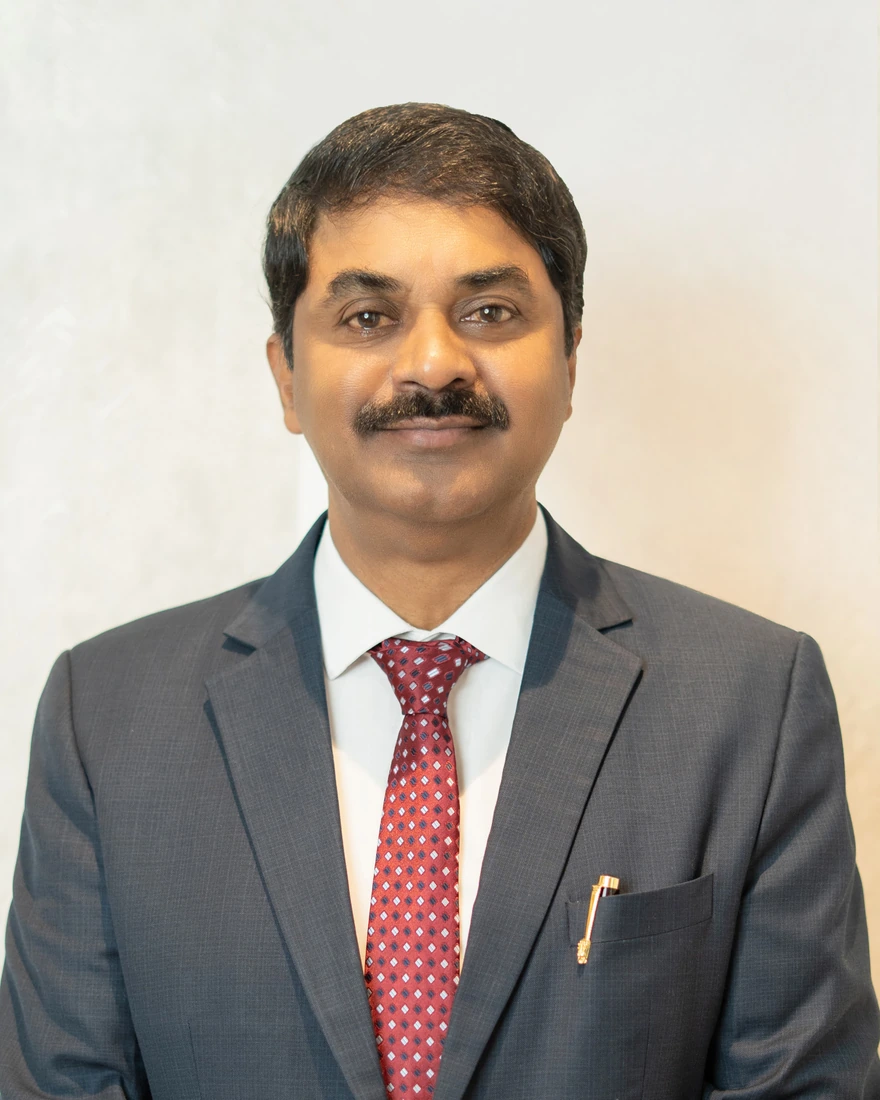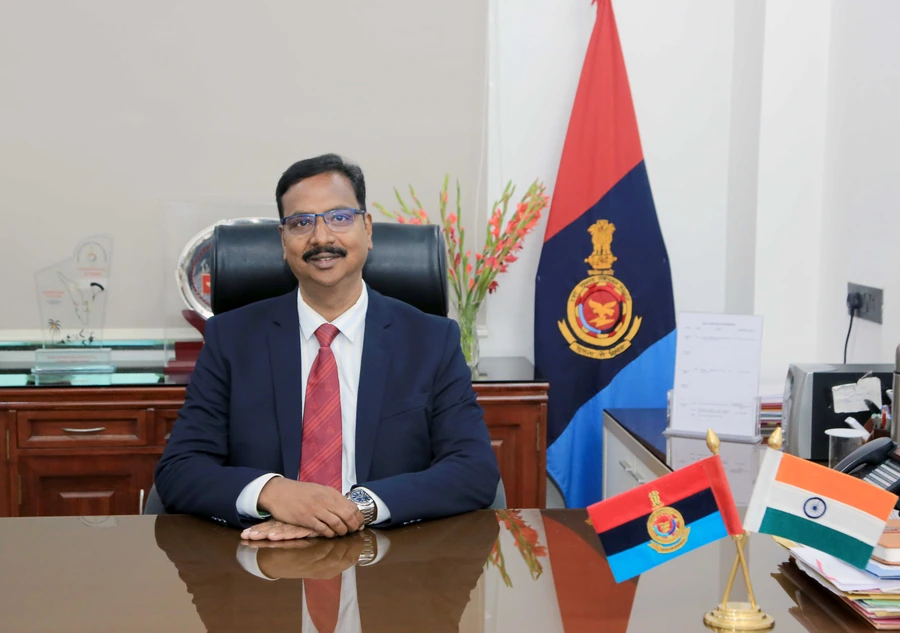
India has spent years trying to get indigenous weapons into service. Lieutenant General P.R. Shankar asks what India learns after one gets there.
His answer begins with the soldier.
“The user is the king. The soldier is the king. Because his life is on the line.”
As former Director General of Artillery, Shankar has seen weapons move through development, trials, acceptance and field use. He later served on the defence board of Larsen & Toubro and now brings that experience into the Indian Institute of Technology Madras (IIT Madras) as a Professor of Practice.
A system may clear trials and receive an order. Troops still have to train on it, maintain it and learn how it behaves outside controlled testing. Early production batches can expose weaknesses that development did not reveal. Those weaknesses have to be corrected before confidence settles.
Only then does equipment become force capability.
Shankar explains the industrial problem through the long evolution of Russian tanks. The T-34 was followed over decades by successive generations. Guns and protection changed. Weight and mobility changed with battlefield requirements.
The designers of the next tank did not begin with an empty page.
India had a different starting point. It became skilled at operating foreign equipment long before it became skilled at designing complete weapon families. Technology transfer could create production competence without giving India the design knowledge required to create the next generation itself.
Dhanush and the Advanced Towed Artillery Gun System gave Indian artillery two different starting points.
Dhanush grew from transfer-of-technology material acquired with the Bofors gun in the 1980s. When India returned to that material years later, engineers revisited the inherited design, replaced technologies that had aged and developed the gun around newer requirements.
The Advanced Towed Artillery Gun System took another route. The Defence Research and Development Organisation had not previously designed a gun of this class. The programme required India to build that competence.
“I call it the T-34 moment. You have now to come to the T-55 moment.”
Dhanush and the Advanced Towed Artillery Gun System have already added guns to the Army. The two programmes also gave India experience it did not have before: designing the gun, producing it and learning from its behaviour in service.
That experience has value only if the next gun begins from it.
Shankar cites the Indian Small Arms System rifle programme as a case where problems surfaced after induction but sustained correction did not produce the stronger product lineage he believes should have followed.
The lesson is not confined to one weapon. Artillery modernisation, naval shipbuilding, air defence and the Integrated Guided Missile Development Programme have all produced experience that could inform other programmes. Shankar argues that India has not yet made such transfer of learning routine.
The Armed Forces are often accused of setting requirements that indigenous products cannot realistically meet. Shankar disagrees.
“The Armed Forces are prepared to accept even 60%, provided we know that the 40% will come in time.”
The figure is illustrative. His point is whether the missing capability can actually be delivered.
An early shortcoming can be accepted when the user knows who will fix it and when. Confidence falls when the same shortcoming survives successive promises.
For industry, the standard is clear: deliver a system the soldier can trust and keep the engineering team attached until known faults are corrected.
“The best technology is that technology which wins you the war.”
Newer is not automatically better in combat. The relevant technology is the one that works in the operating environment, survives use, can be maintained and gives the soldier an advantage when it matters.
When Larsen & Toubro began inducting the K9 Vajra into the Army, Shankar urged the company to remain close to the units using the gun. An engineer near the equipment can see how crews use it, what repeatedly breaks and what difficult terrain exposes.
For major indigenous systems, that proximity should continue through the early years of service.
The Service, developer and manufacturer should maintain a joint support team close to the equipment. Recurring failures and maintenance problems should reach the engineers responsible for correcting them quickly.
What can be fixed in the current system should be fixed there. Larger lessons should move directly into the next design while the original engineering team is still intact.
That continuity matters because defence programmes run over long periods. If the people who solved the first set of problems disperse when production begins, the next programme has to recover knowledge that should already have been available.
“There’s a requirement of getting the front line back into the classroom. It’s two way.”
At IIT Madras, Shankar has used his operational experience to teach and mentor researchers working on military technology.
Research can produce a technological possibility. Engineering has to make it work inside a weapon. Industry has to manufacture it reliably. Field use then reveals conditions that design and testing may not have captured.
The Services and the Ministry of Defence should second selected officers and experienced acquisition practitioners to serious defence-research centres for defined periods. Research and industry teams working on military technologies should, in turn, work on specific operational problems with direct access to users and field conditions.
The purpose is practical. Researchers see the problem before trying to solve it. Engineers understand how the equipment will actually be used. Soldiers gain a route into technical work before design choices become difficult to change.
Shankar has travelled through that exchange himself. As a young officer, he says, he served with Dr A.P.J. Abdul Kalam and was part of the Integrated Guided Missile Development Programme. He now brings that experience, together with four decades of service, into research at IIT Madras.
Knowledge of that value should not depend on accident.
India is early in the cycle Shankar describes. Early generations will carry mistakes, redesign and delay. Defence industries with deeper experience accumulated their competence across repeated generations of correction and improvement.
India now has indigenous programmes from which that continuity can be built.
The gain reaches beyond the weapon. When engineering teams carry solved problems into successor programmes, domestic design capability deepens and suppliers learn with them. Shankar also links stronger research foundations to India’s ability to expand its presence in defence exports.
India will know the first generation has done its full job when the next one no longer starts from the beginning.
The next weapon must begin with what the first one taught us.