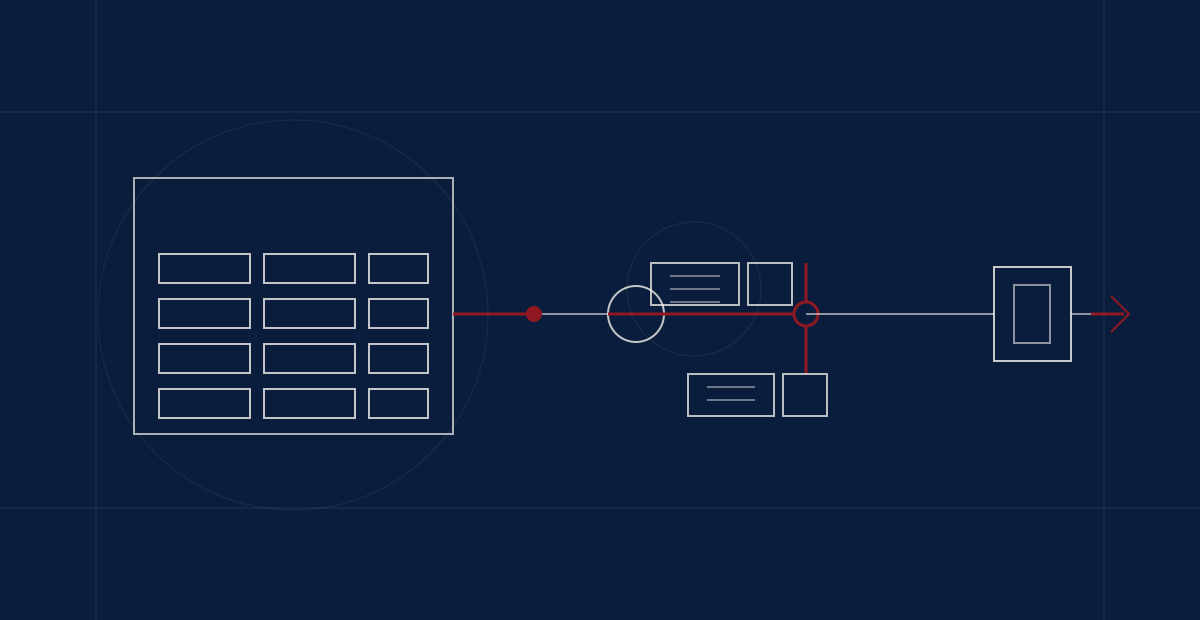
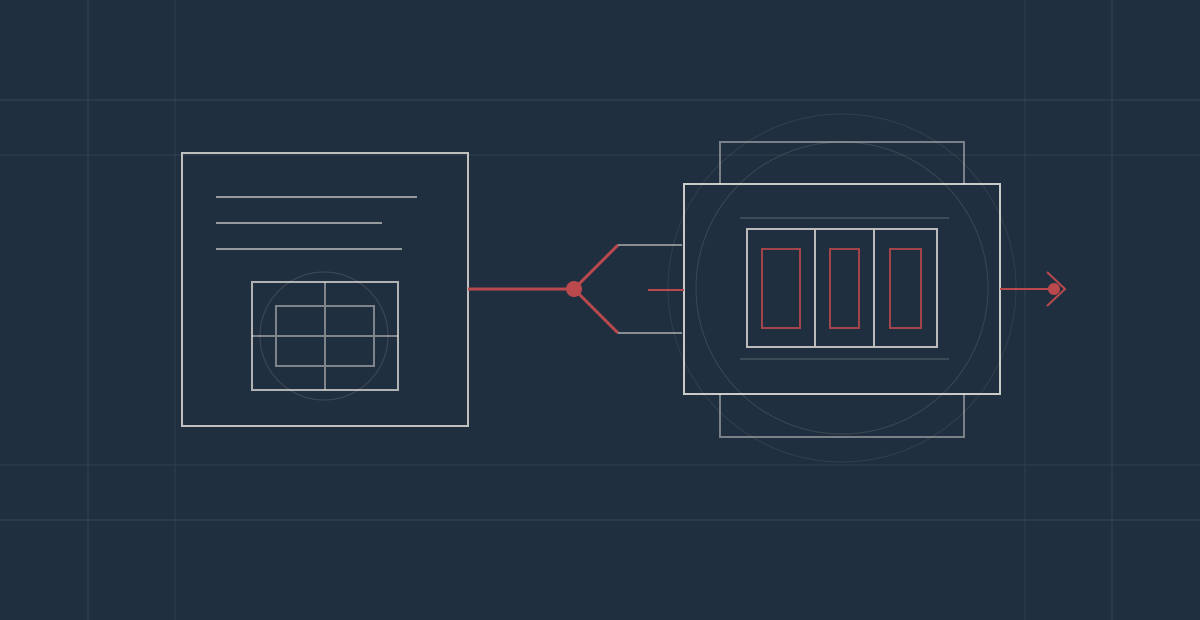
In Indian defence programmes, one institution may design and qualify a weapon while another manufactures it at scale. Production is then transferred to industry through drawings, process know-how and defined engineering responsibility. When the design changes and the manufacturer must still return to the developer for the engineering answer, the handover is incomplete. Production has moved. Engineering responsibility has not.
DRDO’s 2025 technology-transfer procedure already separates production transfer from technology absorption. Its Technology Transfer Document carries the technical baseline into industry: engineering and manufacturing drawings, process parameters, quality plans, bills of material and maintenance information. It is intended to reduce dependence on continued handholding.
Once the recipient can manufacture against that baseline, DRDO can issue a Technology Absorption Certificate. That confirms production capability. It does not test whether industry can carry a change to the baseline within its assigned authority.
Pinaka shows why the distinction matters. Production of its rockets began in 2007–08. Yet a Ministry of Defence annual report later recorded that ARDE had still not finalised the technical document or transferred the Authority Holding Sealed Particulars role to the quality-assurance agency. Production was stopped in July 2016 amid unresolved quality failures. Manufacturing had begun years before the technical and institutional handover was complete.
DRDO’s procedure also recognises that production conditions change. A licensee may develop another source when an inherited supplier fails on quality, quantity, schedule or cost, subject to approval from the concerned laboratory. A different component can alter interfaces, tolerances, materials, software, testing or process conditions. The manufacturer must assess the impact, update the controlled baseline and substantiate the change.
The drawing is not the factory.
Industry needs the engineering knowledge to understand the change and the process control to manufacture it correctly. Where that responsibility has moved to industry, the engineering work must move with it.
Military aviation already separates engineering responsibility from approval. The Centre for Military Airworthiness and Certification (CEMILAC) requires technology-transfer agreements for type-approved airborne stores to assign responsibility for design modifications, defect investigations and continued airworthiness. The Directorate General of Aeronautical Quality Assurance (DGAQA) covers quality assurance and acceptance across development, production, repair, modification and overhaul.
Approval remains independent. The manufacturer must still generate the engineering package when that responsibility is its own.
In the frameworks reviewed for this feature, India Front could not identify a programme-level test that requires industry to carry a substantive engineering change after technology absorption.
That is the missing gate.
For major indigenous programmes where engineering responsibility is transferred to industry, India should add an Industrial Handover Gate after technology absorption. Use a live engineering change where one exists. Otherwise use a controlled case against the live product baseline. A supplier substitution, component replacement or process change is sufficient when it requires real engineering judgement.
The industrial recipient must investigate the issue, develop the response, update the controlled baseline, assess the production impact and prepare the technical evidence for approval. The developer should perform only the work that remains within its mandate. It should not carry the manufacturer’s assigned engineering.
The Gate must be difficult to game. A trivial drawing amendment proves little. So does a test where the developer writes the technical answer and industry repackages it. Define the responsibility before the test. Record who performed the engineering. Keep approval with the existing competent authority.
The programme office should own the Gate. Existing design, quality and certification authorities should assess the evidence within their current mandates. No new regulator is required.
The additional requirement is simple: evidence that industry can execute the engineering responsibility transferred to it.
Without that evidence, defence production can expand while engineering capacity remains concentrated in a few design organisations. Major changes continue to return to the same technical bottleneck.
A real handover leaves more behind than production capacity. It leaves an industrial organisation that has carried a controlled change, manufactured the revised configuration and defended its engineering before an independent authority.
Repeated across programmes, that capability accumulates. India gains more companies able to carry engineering responsibility after the development programme has moved on.
The first production unit shows that industry can build what it received.
The first independently carried engineering change shows whether the handover is real.